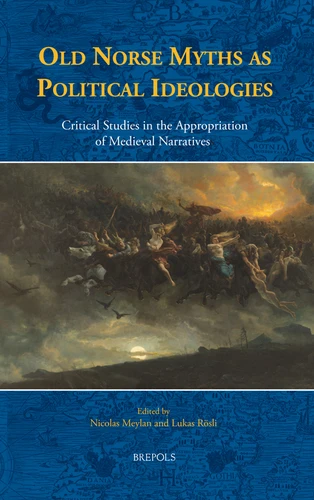
Old Norse Myths as Political Ideologies. Critical Studies in the Appropriation of Medieval Narratives
Par : ,Formats :
- Paiement en ligne :
- Livraison à domicile ou en point Mondial Relay estimée à partir du 22 septembreCet article sera commandé chez un fournisseur et vous sera envoyé 10 jours après la date de votre commande.
- Retrait Click and Collect en magasin gratuit
- Réservation en ligne avec paiement en magasin :
- Indisponible pour réserver et payer en magasin
- Nombre de pages260
- PrésentationRelié
- Poids0.58 kg
- Dimensions15,6 cm × 23,4 cm × 0,0 cm
- ISBN978-2-503-58821-6
- EAN9782503588216
- Date de parution23/10/2020
- CollectionActa Scandinavica
- ÉditeurBrepols
Résumé
The mythology of the Norse world has long been a source of fascination, from the first written texts of thirteenth-century Iceland up to the modern period. Most studies, however, have focused on the content of the narratives themselves, rather than the broader political contexts in which these myths have been explored. This volume offers a timely corrective to this broader trend by offering one of the first in-depth examinations of the political uses of Norse mythology within specific historical contexts.
Tracing the changing interests and usages of Norse myths from the medieval period, via the nineteenth century and the importance of ancient Norse beliefs to both the Romantic and völkisch movements, up to the co-option of mythology and symbolism by political groups across the twentieth and early twenty-first centuries, the papers gathered here offer new and critical insights into the changing nature of historiography and the political agendas that Old Norse myths are made to serve, as well as shedding new light on the way in which ‘myths' are conceptualized.
Tracing the changing interests and usages of Norse myths from the medieval period, via the nineteenth century and the importance of ancient Norse beliefs to both the Romantic and völkisch movements, up to the co-option of mythology and symbolism by political groups across the twentieth and early twenty-first centuries, the papers gathered here offer new and critical insights into the changing nature of historiography and the political agendas that Old Norse myths are made to serve, as well as shedding new light on the way in which ‘myths' are conceptualized.