Nouveauté
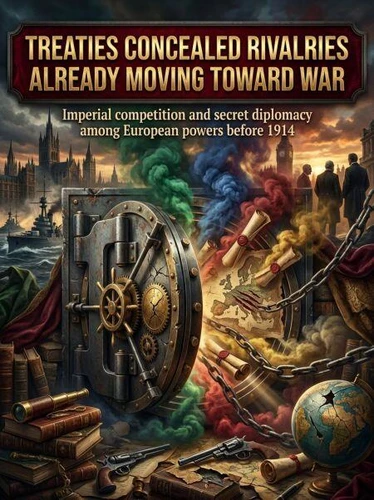
Treaties Concealed Rivalries Already Moving Toward War. Imperial competition and secret diplomacy among European powers before 1914
Par :Formats :
Disponible dans votre compte client Decitre ou Furet du Nord dès validation de votre commande. Le format ePub est :
- Compatible avec une lecture sur My Vivlio (smartphone, tablette, ordinateur)
- Compatible avec une lecture sur liseuses Vivlio
- Pour les liseuses autres que Vivlio, vous devez utiliser le logiciel Adobe Digital Edition. Non compatible avec la lecture sur les liseuses Kindle, Remarkable et Sony
 , qui est-ce ?
Notre partenaire de plateforme de lecture numérique où vous retrouverez l'ensemble de vos ebooks gratuitement
Pour en savoir plus sur nos ebooks, consultez notre aide en ligne ici
C'est si simple ! Lisez votre ebook avec l'app Vivlio sur votre tablette, mobile ou ordinateur :

- Nombre de pages191
- FormatePub
- ISBN978-3-565-47816-3
- EAN9783565478163
- Date de parution05/06/2026
- Protection num.pas de protection
- Taille1 Mo
- Infos supplémentairesepub
- ÉditeurEmphaloz Publishing House
Résumé
Nineteenth-century Europe appeared increasingly interconnected through trade, technology, and diplomacy. Beneath that stability, however, major powers expanded military alliances, colonial ambitions, and strategic rivalries that slowly transformed the continent into a landscape of permanent geopolitical tension.
This account explores the international competition shaping Europe between the Congress of Vienna and the outbreak of the First World War.
Industrial economies strengthened military production while overseas empires became symbols of national prestige and strategic necessity. Britain, France, Germany, Russia, and Austria-Hungary pursued colonial expansion through naval power, diplomatic maneuvering, and covert agreements designed to preserve balance while advancing national interests. The book also examines how technological modernization altered warfare and state administration.
Telegraph communication accelerated diplomatic coordination, rail systems improved troop mobilization, and industrial manufacturing increased the scale of military preparedness across Europe. Political leaders increasingly operated within systems where rapid escalation became difficult to control once crises emerged. The years before 1914 therefore appear not as a peaceful age interrupted by war, but as a period where industrial modernity intensified imperial competition until conflict became structurally embedded within European politics.
Industrial economies strengthened military production while overseas empires became symbols of national prestige and strategic necessity. Britain, France, Germany, Russia, and Austria-Hungary pursued colonial expansion through naval power, diplomatic maneuvering, and covert agreements designed to preserve balance while advancing national interests. The book also examines how technological modernization altered warfare and state administration.
Telegraph communication accelerated diplomatic coordination, rail systems improved troop mobilization, and industrial manufacturing increased the scale of military preparedness across Europe. Political leaders increasingly operated within systems where rapid escalation became difficult to control once crises emerged. The years before 1914 therefore appear not as a peaceful age interrupted by war, but as a period where industrial modernity intensified imperial competition until conflict became structurally embedded within European politics.