
Specializes in military history, intelligence operations, and Cold War geopolitics.
Nouveauté
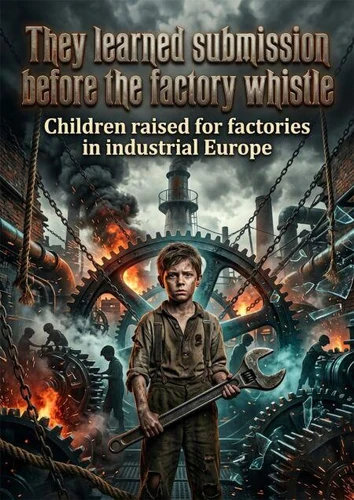
They learned submission before the factory whistle. Children raised for factories in industrial Europe
Par :Formats :
Disponible dans votre compte client Decitre ou Furet du Nord dès validation de votre commande. Le format ePub est :
- Compatible avec une lecture sur My Vivlio (smartphone, tablette, ordinateur)
- Compatible avec une lecture sur liseuses Vivlio
- Pour les liseuses autres que Vivlio, vous devez utiliser le logiciel Adobe Digital Edition. Non compatible avec la lecture sur les liseuses Kindle, Remarkable et Sony
 , qui est-ce ?
Notre partenaire de plateforme de lecture numérique où vous retrouverez l'ensemble de vos ebooks gratuitement
Pour en savoir plus sur nos ebooks, consultez notre aide en ligne ici
C'est si simple ! Lisez votre ebook avec l'app Vivlio sur votre tablette, mobile ou ordinateur :

- Nombre de pages218
- FormatePub
- ISBN978-3-565-59361-3
- EAN9783565593613
- Date de parution27/07/2026
- Protection num.pas de protection
- Taille1 Mo
- Infos supplémentairesepub
- ÉditeurEmphaloz Publishing House
Résumé
In the mills of Manchester and the mines of the Ruhr, children as young as five formed the backbone of an industrializing continent long before any classroom claimed them. This is not a sentimental history of lost innocence but a sober reconstruction of how economic necessity, religious doctrine, and emerging state power competed to define what a child should become. From the parish apprentices of eighteenth-century England to the compulsory schooling laws that swept across Prussia and France, the book traces the slow, contested shift from child as productive asset to child as protected citizen.
It examines how reformers, factory owners, and parents themselves negotiated the boundary between survival and exploitation, between discipline and care. What emerges is a Europe that invented childhood only by first denying it-and that the reforms we now take for granted were neither inevitable nor universally embraced. The book closes by considering what this history reveals about contemporary debates over child labor, educational access, and the rights of the young in an unequal world.
It examines how reformers, factory owners, and parents themselves negotiated the boundary between survival and exploitation, between discipline and care. What emerges is a Europe that invented childhood only by first denying it-and that the reforms we now take for granted were neither inevitable nor universally embraced. The book closes by considering what this history reveals about contemporary debates over child labor, educational access, and the rights of the young in an unequal world.