SOLDES
Jusqu'à -70% sur une sélection d'articles*

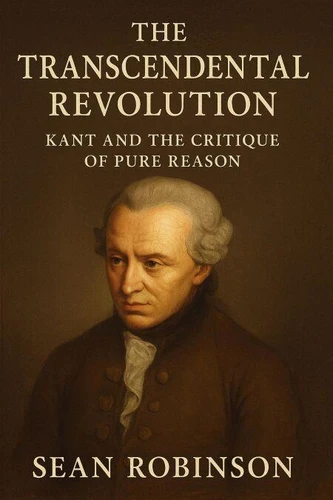
The Transcendental Revolution: Kant and the Critique of Pure Reason
Par :Formats :
Disponible dans votre compte client Decitre ou Furet du Nord dès validation de votre commande. Le format ePub est :
- Compatible avec une lecture sur My Vivlio (smartphone, tablette, ordinateur)
- Compatible avec une lecture sur liseuses Vivlio
- Pour les liseuses autres que Vivlio, vous devez utiliser le logiciel Adobe Digital Edition. Non compatible avec la lecture sur les liseuses Kindle, Remarkable et Sony
 , qui est-ce ?
Notre partenaire de plateforme de lecture numérique où vous retrouverez l'ensemble de vos ebooks gratuitement
Pour en savoir plus sur nos ebooks, consultez notre aide en ligne ici
C'est si simple ! Lisez votre ebook avec l'app Vivlio sur votre tablette, mobile ou ordinateur :

- FormatePub
- ISBN8230510864
- EAN9798230510864
- Date de parution16/04/2025
- Protection num.pas de protection
- Infos supplémentairesepub
- ÉditeurIndependently Published
Résumé
The Transcendental Revolution: Kant and the Critique of Pure Reason by Sean Robinson offers a comprehensive and accessible exploration of Immanuel Kant's transformative work, Critique of Pure Reason, which fundamentally reshaped the landscape of philosophy. The book delves into Kant's central arguments, focusing on his revolution in epistemology and metaphysics, particularly his development of transcendental idealism.
Robinson traces how Kant's critical philosophy challenged both empiricism and rationalism, offering a novel perspective on how human beings engage with the world and how knowledge is structured by the mind's a priori categories. The book examines Kant's argument that while we can never know things-in-themselves (noumena), we can know the world as it appears to us (phenomena), structured by the categories of the human mind.
Robinson also investigates Kant's critique of metaphysical systems, the role of morality in Kant's philosophy, and his lasting impact on later philosophical movements, including German idealism, existentialism, and modern political theory. Through clear explanations of Kant's complex ideas, The Transcendental Revolution illuminates the enduring significance of Kant's work, highlighting his influence on subsequent thinkers and contemporary debates in philosophy, ethics, and science.
Robinson traces how Kant's critical philosophy challenged both empiricism and rationalism, offering a novel perspective on how human beings engage with the world and how knowledge is structured by the mind's a priori categories. The book examines Kant's argument that while we can never know things-in-themselves (noumena), we can know the world as it appears to us (phenomena), structured by the categories of the human mind.
Robinson also investigates Kant's critique of metaphysical systems, the role of morality in Kant's philosophy, and his lasting impact on later philosophical movements, including German idealism, existentialism, and modern political theory. Through clear explanations of Kant's complex ideas, The Transcendental Revolution illuminates the enduring significance of Kant's work, highlighting his influence on subsequent thinkers and contemporary debates in philosophy, ethics, and science.
A propos de Sean Robinson
2,99 €
2,99 €
2,99 €
2,99 €
2,99 €
2,99 €