
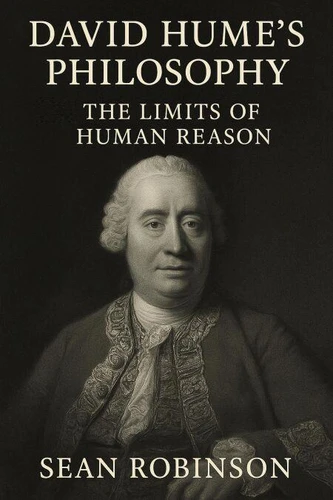
David Hume's Philosophy: The Limits of Human Reason
Par :Formats :
Disponible dans votre compte client Decitre ou Furet du Nord dès validation de votre commande. Le format ePub est :
- Compatible avec une lecture sur My Vivlio (smartphone, tablette, ordinateur)
- Compatible avec une lecture sur liseuses Vivlio
- Pour les liseuses autres que Vivlio, vous devez utiliser le logiciel Adobe Digital Edition. Non compatible avec la lecture sur les liseuses Kindle, Remarkable et Sony
 , qui est-ce ?
Notre partenaire de plateforme de lecture numérique où vous retrouverez l'ensemble de vos ebooks gratuitement
Pour en savoir plus sur nos ebooks, consultez notre aide en ligne ici
C'est si simple ! Lisez votre ebook avec l'app Vivlio sur votre tablette, mobile ou ordinateur :

- FormatePub
- ISBN8227529510
- EAN9798227529510
- Date de parution16/04/2025
- Protection num.pas de protection
- Infos supplémentairesepub
- ÉditeurBig Dog Books, LLC
Résumé
David Hume's Philosophy: The Limits of Human Reason by Sean Robinson offers a comprehensive exploration of one of the most influential thinkers in modern philosophy. This book delves deeply into Hume's skepticism regarding human cognition, questioning the capacity of reason to explain the complexities of knowledge, morality, and the natural world. It examines Hume's critiques of metaphysical and religious reasoning, his challenge to the validity of inductive logic, and his theory of morality based on sentiment rather than rational deduction.
Through an accessible yet rigorous analysis, the book traces the profound impact of Hume's ideas on subsequent thinkers, including Immanuel Kant, Karl Popper, and contemporary moral psychologists. By addressing Hume's views on causality, human nature, and political order, the book highlights the lasting relevance of Hume's philosophy in today's intellectual landscape. Through this work, readers gain insight into the enduring questions that shape the intersection of reason, emotion, and knowledge in both philosophy and practical life.
Through an accessible yet rigorous analysis, the book traces the profound impact of Hume's ideas on subsequent thinkers, including Immanuel Kant, Karl Popper, and contemporary moral psychologists. By addressing Hume's views on causality, human nature, and political order, the book highlights the lasting relevance of Hume's philosophy in today's intellectual landscape. Through this work, readers gain insight into the enduring questions that shape the intersection of reason, emotion, and knowledge in both philosophy and practical life.
A propos de Sean Robinson
2,99 €
2,99 €
2,99 €
2,99 €
2,99 €
2,99 €