SOLDES
Jusqu'à -70% sur une sélection d'articles*

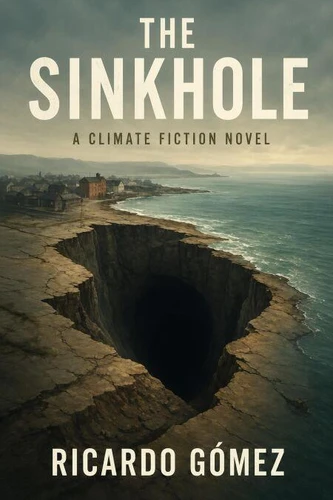
The Sinkhole: A Port Townsend Climate Fiction Novel
Par :Formats :
Disponible dans votre compte client Decitre ou Furet du Nord dès validation de votre commande. Le format ePub est :
- Compatible avec une lecture sur My Vivlio (smartphone, tablette, ordinateur)
- Compatible avec une lecture sur liseuses Vivlio
- Pour les liseuses autres que Vivlio, vous devez utiliser le logiciel Adobe Digital Edition. Non compatible avec la lecture sur les liseuses Kindle, Remarkable et Sony
 , qui est-ce ?
Notre partenaire de plateforme de lecture numérique où vous retrouverez l'ensemble de vos ebooks gratuitement
Pour en savoir plus sur nos ebooks, consultez notre aide en ligne ici
C'est si simple ! Lisez votre ebook avec l'app Vivlio sur votre tablette, mobile ou ordinateur :

- FormatePub
- ISBN8235873216
- EAN9798235873216
- Date de parution04/01/2026
- Protection num.pas de protection
- Infos supplémentairesepub
- ÉditeurIoakim Ioakim
Résumé
Port Townsend, Washington. March 24, 2035. The Cascadia Subduction Zone ruptures and opens a catastrophic sinkhole beneath the marine science center. Marine biologist Isabel Reyes throws six children across the widening crack before the ground disappears. They survive. The center, and everyone still inside it, does not. Port Townsend is a Victorian town on Washington's Olympic Peninsula. Isabel Reyes built her marine science program over eight years, teaching children to love organisms that may not survive the century.
Reed Hawthorne is a climate scientist in a region already living on borrowed time. Sandy, an Indigenous organizer, learns from her grandmother Clarita - a Quileute elder who senses the earthquake before science predicts it - how to witness what is lost without surrendering to the loss. None of them yet knows what the Chimacum Valley will ask of them. The earthquake leaves the peninsula cut off. In Chimacum, the survivors organize sociocracy circles, consensus decisions, and a radio network that reaches forty communities and shrinks to fifteen as the region collapses.
The systems work, as much as they can work. And each week they keep working, the valley accrues a debt: the families who did not arrive in time, the people left outside the network, the ones who waited for an answer that never came. The Sinkhole offers no technological salvation and no cheap hope - only genuine, unsettling realism, and the question of what you do when you can predict catastrophe but cannot prevent it.
For readers of Paolo Cognetti and Ling Ma.
Reed Hawthorne is a climate scientist in a region already living on borrowed time. Sandy, an Indigenous organizer, learns from her grandmother Clarita - a Quileute elder who senses the earthquake before science predicts it - how to witness what is lost without surrendering to the loss. None of them yet knows what the Chimacum Valley will ask of them. The earthquake leaves the peninsula cut off. In Chimacum, the survivors organize sociocracy circles, consensus decisions, and a radio network that reaches forty communities and shrinks to fifteen as the region collapses.
The systems work, as much as they can work. And each week they keep working, the valley accrues a debt: the families who did not arrive in time, the people left outside the network, the ones who waited for an answer that never came. The Sinkhole offers no technological salvation and no cheap hope - only genuine, unsettling realism, and the question of what you do when you can predict catastrophe but cannot prevent it.
For readers of Paolo Cognetti and Ling Ma.
A propos de Ricardo Gómez
The Language Between
E-book
5,49 €
Los Que Se Fueron
E-book
5,49 €
6,49 €
6,49 €
The Andalusian Covenant
E-book
6,49 €
Hermanos de Sangre
E-book
7,49 €
5,49 €
7,49 €