Gideon Hart is a nonfiction author who writes about leadership, philosophy, and the psychology of decision-making. His work explores how discipline, resilience, and long-term thinking shape both personal growth and success in times of uncertainty.
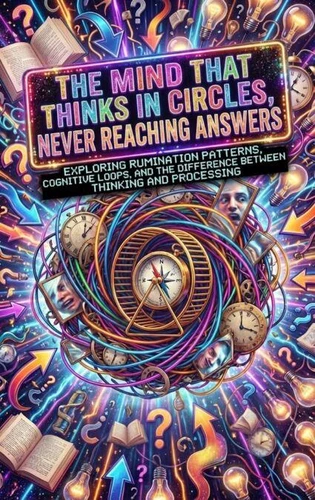
The Mind That Thinks in Circles, Never Reaching Answers. Exploring Rumination Patterns, Cognitive Loops, and The Difference Between Thinking and Processing
Par :Formats :
Disponible dans votre compte client Decitre ou Furet du Nord dès validation de votre commande. Le format ePub est :
- Compatible avec une lecture sur My Vivlio (smartphone, tablette, ordinateur)
- Compatible avec une lecture sur liseuses Vivlio
- Pour les liseuses autres que Vivlio, vous devez utiliser le logiciel Adobe Digital Edition. Non compatible avec la lecture sur les liseuses Kindle, Remarkable et Sony
 , qui est-ce ?
Notre partenaire de plateforme de lecture numérique où vous retrouverez l'ensemble de vos ebooks gratuitement
Pour en savoir plus sur nos ebooks, consultez notre aide en ligne ici
C'est si simple ! Lisez votre ebook avec l'app Vivlio sur votre tablette, mobile ou ordinateur :

- Nombre de pages205
- FormatePub
- ISBN978-3-565-20080-1
- EAN9783565200801
- Date de parution27/01/2026
- Protection num.pas de protection
- Taille2 Mo
- Infos supplémentairesepub
- ÉditeurEmphaloz Publishing House
Résumé
You replay the conversation again, analyzing every word, searching for hidden meaning. You imagine future scenarios, preparing for disasters that haven't happened. You review past decisions, convinced you missed something crucial. Your mind tells you this constant thinking is problem-solving, preparation, protection. But it never leads to clarity-just more loops, more exhaustion, more questions replacing answers.
This book explores overthinking not as careful analysis, but as rumination masquerading as productivity.
It examines how cognitive patterns form, why certain thoughts feel urgent and inescapable, the difference between reflection and mental spinning, and the way anxiety fuels thinking that never resolves. It looks at catastrophizing, mind-reading, the illusion of control through mental rehearsal, and the exhaustion of believing you can think your way to safety. Rather than prescribing thought-stopping techniques or forced positivity, this book reframes cognitive awareness as recognizing when thinking becomes compulsive rather than constructive.
It explores cognitive distortions, interrupting rumination cycles, the intelligence of redirecting attention, and the relief of accepting uncertainty instead of endlessly preparing for it. It examines the difference between solving problems and rehearsing fear. For anyone trapped in mental loops, convinced more thinking will eventually produce the right answer, or exhausted from constant analysis that changes nothing-this book offers insight into rumination as anxiety's disguise, permission to step off the thought treadmill, and clarity about the difference between thinking deeply and thinking destructively.
It examines how cognitive patterns form, why certain thoughts feel urgent and inescapable, the difference between reflection and mental spinning, and the way anxiety fuels thinking that never resolves. It looks at catastrophizing, mind-reading, the illusion of control through mental rehearsal, and the exhaustion of believing you can think your way to safety. Rather than prescribing thought-stopping techniques or forced positivity, this book reframes cognitive awareness as recognizing when thinking becomes compulsive rather than constructive.
It explores cognitive distortions, interrupting rumination cycles, the intelligence of redirecting attention, and the relief of accepting uncertainty instead of endlessly preparing for it. It examines the difference between solving problems and rehearsing fear. For anyone trapped in mental loops, convinced more thinking will eventually produce the right answer, or exhausted from constant analysis that changes nothing-this book offers insight into rumination as anxiety's disguise, permission to step off the thought treadmill, and clarity about the difference between thinking deeply and thinking destructively.