Gideon Hart is a nonfiction author who writes about leadership, philosophy, and the psychology of decision-making. His work explores how discipline, resilience, and long-term thinking shape both personal growth and success in times of uncertainty.
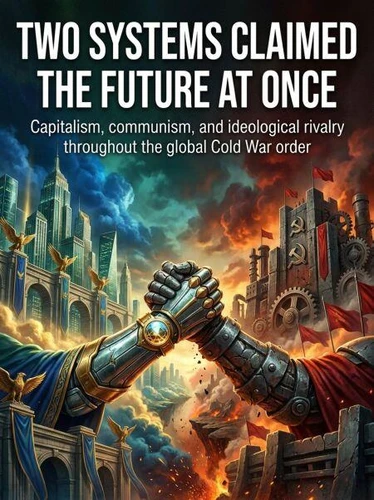
Two Systems Claimed the Future at Once. Capitalism, communism, and ideological rivalry throughout the global Cold War order
Par :Formats :
Disponible dans votre compte client Decitre ou Furet du Nord dès validation de votre commande. Le format ePub est :
- Compatible avec une lecture sur My Vivlio (smartphone, tablette, ordinateur)
- Compatible avec une lecture sur liseuses Vivlio
- Pour les liseuses autres que Vivlio, vous devez utiliser le logiciel Adobe Digital Edition. Non compatible avec la lecture sur les liseuses Kindle, Remarkable et Sony
 , qui est-ce ?
Notre partenaire de plateforme de lecture numérique où vous retrouverez l'ensemble de vos ebooks gratuitement
Pour en savoir plus sur nos ebooks, consultez notre aide en ligne ici
C'est si simple ! Lisez votre ebook avec l'app Vivlio sur votre tablette, mobile ou ordinateur :

- Nombre de pages225
- FormatePub
- ISBN978-3-565-47788-3
- EAN9783565477883
- Date de parution05/06/2026
- Protection num.pas de protection
- Taille1 Mo
- Infos supplémentairesepub
- ÉditeurEmphaloz Publishing House
Résumé
The Cold War divided the twentieth century into competing visions of human society. One side defended liberal democracy, market economies, and strategic alliances led by the United States. The other promoted centralized planning, revolutionary collectivism, and socialist expansion under Soviet influence. Between them stood a world forced to navigate permanent tension without direct global war.
This book examines the ideological foundations of the Cold War and the political structures built around them.
Propaganda, intelligence operations, and economic aid programs became instruments for spreading influence far beyond Europe. Governments framed domestic policy and international diplomacy alike through the language of existential struggle between opposing systems of modernity. The narrative also follows how this rivalry shaped societies across Asia, Africa, and Latin America. Local revolutions, anti-colonial movements, and authoritarian regimes frequently became entangled within the strategic competition of the superpowers.
Political conflicts that appeared regional often carried global consequences once ideological alignment entered the calculation. The Cold War emerges here not simply as a diplomatic standoff, but as a worldwide contest over which political model would define the modern age.
Propaganda, intelligence operations, and economic aid programs became instruments for spreading influence far beyond Europe. Governments framed domestic policy and international diplomacy alike through the language of existential struggle between opposing systems of modernity. The narrative also follows how this rivalry shaped societies across Asia, Africa, and Latin America. Local revolutions, anti-colonial movements, and authoritarian regimes frequently became entangled within the strategic competition of the superpowers.
Political conflicts that appeared regional often carried global consequences once ideological alignment entered the calculation. The Cold War emerges here not simply as a diplomatic standoff, but as a worldwide contest over which political model would define the modern age.