Gideon Hart is a nonfiction author who writes about leadership, philosophy, and the psychology of decision-making. His work explores how discipline, resilience, and long-term thinking shape both personal growth and success in times of uncertainty.
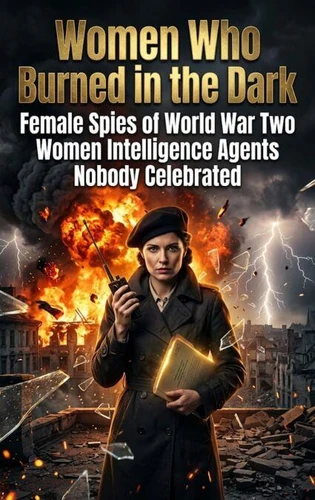
Women Who Burned in the Dark. Female Spies of World War Two Women Intelligence Agents Nobody Celebrated
Par :Formats :
Disponible dans votre compte client Decitre ou Furet du Nord dès validation de votre commande. Le format ePub est :
- Compatible avec une lecture sur My Vivlio (smartphone, tablette, ordinateur)
- Compatible avec une lecture sur liseuses Vivlio
- Pour les liseuses autres que Vivlio, vous devez utiliser le logiciel Adobe Digital Edition. Non compatible avec la lecture sur les liseuses Kindle, Remarkable et Sony
 , qui est-ce ?
Notre partenaire de plateforme de lecture numérique où vous retrouverez l'ensemble de vos ebooks gratuitement
Pour en savoir plus sur nos ebooks, consultez notre aide en ligne ici
C'est si simple ! Lisez votre ebook avec l'app Vivlio sur votre tablette, mobile ou ordinateur :

- Nombre de pages209
- FormatePub
- ISBN978-3-565-46092-2
- EAN9783565460922
- Date de parution26/05/2026
- Protection num.pas de protection
- Taille1 Mo
- Infos supplémentairesepub
- ÉditeurEmphaloz Publishing House
Résumé
This book investigates how ordinary women turned into silent engines of Allied resistance, tracing the lives of female spies whose courage outstripped the recognition they ever received. It follows the paths of women who moved through occupied Europe and behind enemy lines, using their perceived invisibility as cover while orchestrating sabotage, transmitting codes, and guiding resistance cells under constant threat of capture and execution.
Drawing on archives from the SOE, OSS, and national intelligence services, the book reconstructs the practical machinery of wartime espionage: how women were recruited, trained, and disguised; how they navigated networks, radios, and dead-drop operations; and how they survived interrogation, betrayal, and long imprisonment when their missions failed.
It also examines the gendered imaginaries of "virago, " "mascot, " and "housewife" that shaped both their deployment and the postwar amnesia surrounding their stories, showing how official narratives deliberately minimized female agency in favor of sanitized, male-centric hero myths.
It also examines the gendered imaginaries of "virago, " "mascot, " and "housewife" that shaped both their deployment and the postwar amnesia surrounding their stories, showing how official narratives deliberately minimized female agency in favor of sanitized, male-centric hero myths.