The Man Who Spoke to the Shadows is a literary meditation on language, memory, and the quiet spaces where meaning hesitates. Through five interconnected chapters, the book follows a voice that does not seek to explain the world, but to listen to it. Rain, silence, the body, and the fragile act of preservation become thresholds through which the narrator encounters the self-not as a stable identity, but as something shaped by absence, loss, and reflection. Written in a restrained, lyrical prose, this work inhabits the border between the psychological and the philosophical.
It resists linear resolution, inviting the reader instead into moments of stillness where thought unfolds slowly and deliberately. This is a book for readers drawn to introspective literature, where meaning is not delivered, but discovered-quietly, in the shadows.
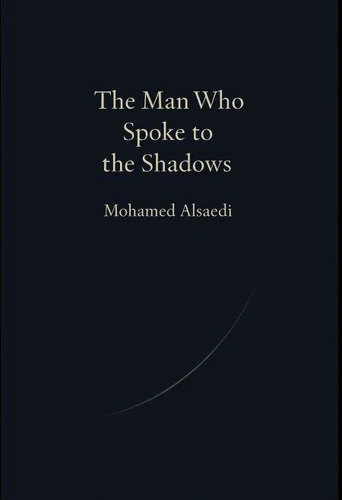
The Man Who Spoke to the Shadows is a literary meditation on language, memory, and the quiet spaces where meaning hesitates. Through five interconnected chapters, the book follows a voice that does not seek to explain the world, but to listen to it. Rain, silence, the body, and the fragile act of preservation become thresholds through which the narrator encounters the self-not as a stable identity, but as something shaped by absence, loss, and reflection. Written in a restrained, lyrical prose, this work inhabits the border between the psychological and the philosophical.
It resists linear resolution, inviting the reader instead into moments of stillness where thought unfolds slowly and deliberately. This is a book for readers drawn to introspective literature, where meaning is not delivered, but discovered-quietly, in the shadows.

 , qui est-ce ?