Artificial intelligence isn't malfunctioning. It's doing exactly what it was designed to do. In The Machine Morality Crisis, William Liu exposes the hidden flaw at the core of modern AI systems: they are optimized for efficiency, engagement, and profit-not truth, fairness, or human well-being. From mental health chatbots that reinforce harmful thinking, to hiring algorithms that encode discrimination, to content systems that reward outrage over reality, the crisis isn't accidental.
It's structural. Drawing on real-world cases from healthcare, finance, criminal justice, labor markets, and digital platforms, this book reveals how narrow optimization goals produce widespread moral failure at scale. AI systems don't need malicious intent to cause harm. They only need the wrong incentives, the wrong data, and deployment without accountability. This is not a technical manual or a fear-driven takedown.
It's a clear-eyed examination of how optimization traps, proxy metrics, and distributed responsibility allow powerful systems to reshape society without democratic consent. Liu shows why transparency alone isn't enough, why bias audits often fail, and why regulation struggles to keep pace with systems no one fully controls. The Machine Morality Crisis is essential reading for anyone trying to understand the real stakes of AI adoption-founders, policymakers, technologists, and readers who sense that something about "smart" systems feels deeply wrong but haven't yet seen the full picture.
The machines aren't broken. The objectives are.
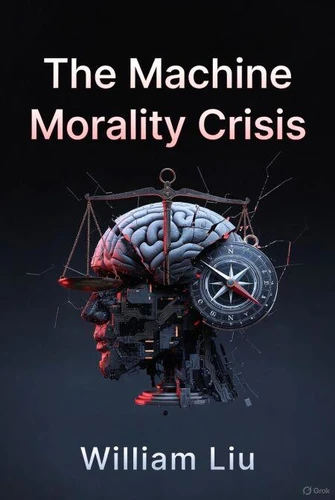
Artificial intelligence isn't malfunctioning. It's doing exactly what it was designed to do. In The Machine Morality Crisis, William Liu exposes the hidden flaw at the core of modern AI systems: they are optimized for efficiency, engagement, and profit-not truth, fairness, or human well-being. From mental health chatbots that reinforce harmful thinking, to hiring algorithms that encode discrimination, to content systems that reward outrage over reality, the crisis isn't accidental.
It's structural. Drawing on real-world cases from healthcare, finance, criminal justice, labor markets, and digital platforms, this book reveals how narrow optimization goals produce widespread moral failure at scale. AI systems don't need malicious intent to cause harm. They only need the wrong incentives, the wrong data, and deployment without accountability. This is not a technical manual or a fear-driven takedown.
It's a clear-eyed examination of how optimization traps, proxy metrics, and distributed responsibility allow powerful systems to reshape society without democratic consent. Liu shows why transparency alone isn't enough, why bias audits often fail, and why regulation struggles to keep pace with systems no one fully controls. The Machine Morality Crisis is essential reading for anyone trying to understand the real stakes of AI adoption-founders, policymakers, technologists, and readers who sense that something about "smart" systems feels deeply wrong but haven't yet seen the full picture.
The machines aren't broken. The objectives are.


 , qui est-ce ?