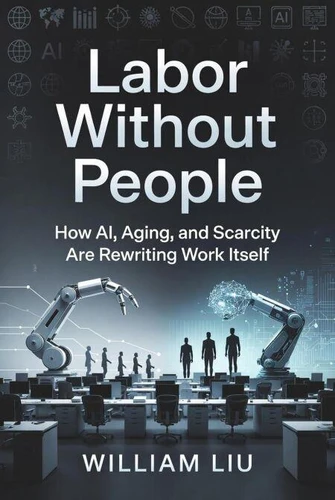
Labor Without People How AI, Aging, and Scarcity Are Rewriting Work Itself
Par :Formats :
Disponible dans votre compte client Decitre ou Furet du Nord dès validation de votre commande. Le format ePub est :
- Compatible avec une lecture sur My Vivlio (smartphone, tablette, ordinateur)
- Compatible avec une lecture sur liseuses Vivlio
- Pour les liseuses autres que Vivlio, vous devez utiliser le logiciel Adobe Digital Edition. Non compatible avec la lecture sur les liseuses Kindle, Remarkable et Sony
 , qui est-ce ?
Notre partenaire de plateforme de lecture numérique où vous retrouverez l'ensemble de vos ebooks gratuitement
Pour en savoir plus sur nos ebooks, consultez notre aide en ligne ici
C'est si simple ! Lisez votre ebook avec l'app Vivlio sur votre tablette, mobile ou ordinateur :

- FormatePub
- ISBN8233524219
- EAN9798233524219
- Date de parution22/01/2026
- Protection num.pas de protection
- Infos supplémentairesepub
- ÉditeurLinda Balsamo
Résumé
Advanced economies are not facing a jobs crisis. They are facing a people crisis. Across healthcare, construction, manufacturing, education, and services, positions remain unfilled not because wages are too low or skills are mismatched, but because the workers who would fill them were never born. Labor Without People explains why demographic decline, not automation, is becoming the dominant force reshaping work.
Using global fertility trends, aging data, and labor market outcomes, the book shows how shrinking workforces invert traditional assumptions about growth, productivity, and employment power. Rather than machines replacing humans, technology is increasingly deployed to compensate for human absence. Institutions built for population growth are failing under contraction, and economic systems designed around unemployment no longer function when labor itself is scarce.
This book provides a clear, unsentimental diagnosis of a structural shift already underway.
Using global fertility trends, aging data, and labor market outcomes, the book shows how shrinking workforces invert traditional assumptions about growth, productivity, and employment power. Rather than machines replacing humans, technology is increasingly deployed to compensate for human absence. Institutions built for population growth are failing under contraction, and economic systems designed around unemployment no longer function when labor itself is scarce.
This book provides a clear, unsentimental diagnosis of a structural shift already underway.