Nouveauté
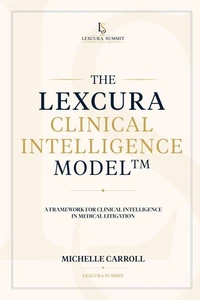
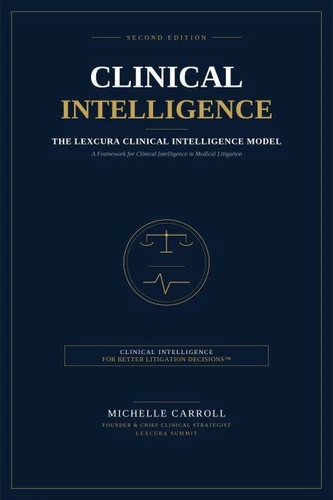
The Lexcura Clincal Intelligence Model. 2nd Edition
Par :Formats :
Disponible dans votre compte client Decitre ou Furet du Nord dès validation de votre commande. Le format ePub est :
- Compatible avec une lecture sur My Vivlio (smartphone, tablette, ordinateur)
- Compatible avec une lecture sur liseuses Vivlio
- Pour les liseuses autres que Vivlio, vous devez utiliser le logiciel Adobe Digital Edition. Non compatible avec la lecture sur les liseuses Kindle, Remarkable et Sony
 , qui est-ce ?
Notre partenaire de plateforme de lecture numérique où vous retrouverez l'ensemble de vos ebooks gratuitement
Pour en savoir plus sur nos ebooks, consultez notre aide en ligne ici
C'est si simple ! Lisez votre ebook avec l'app Vivlio sur votre tablette, mobile ou ordinateur :

- FormatePub
- ISBN8952094215
- EAN9798952094215
- Date de parution11/08/2026
- Protection num.pas de protection
- Infos supplémentairesepub
- ÉditeurMichelle Carroll
Résumé
Full Description - Up to 4, 000 CharactersComplex medical cases rarely turn on a single document, isolated event or clinical opinion. The real story is found in the relationship between the patient's baseline condition, the integrity of the records, the imaging, the sequence of events, the care provided, the regulatory environment and the clinical consequences that followed. The Lexcura Clinical Intelligence ModelT, Second Edition presents an expanded seven-pillar framework for examining that complete story.
Developed by Michelle Carroll from more than forty years of healthcare experience, the model provides attorneys, clinicians, claims professionals and medical-legal teams with a structured method for organizing and evaluating complex clinical evidence. It is designed to support better litigation decisions without replacing the independent judgment of attorneys, clinicians or qualified experts. This second edition introduces Imaging Analysis as a distinct third pillar, recognizing that imaging may provide some of the most objective evidence in a medical record.
When evaluated alongside the written documentation and clinical timeline, imaging can confirm progression, expose inconsistencies and clarify what was known-or should have been recognized-at a critical point in the patient's care. The seven pillars are: Record Integrity Baseline Profiling Imaging Analysis Timeline Reconstruction Standard of Care Review Regulatory and Compliance Overlay Causation Mapping Together, these pillars create a disciplined path from an incomplete collection of records to a coherent, evidence-based understanding of the patient's journey.
Readers will learn how to identify missing or unreliable documentation, establish the patient's true clinical baseline, place imaging findings within the chronology, reconstruct critical events, assess whether the care provided was clinically reasonable, examine relevant regulatory responsibilities and distinguish causation from chronology or assumption. The book also explains why clinical evidence must be evaluated in context.
A poor outcome does not automatically establish negligence. A documented deviation does not, by itself, prove causation. Conversely, records that appear complete may still conceal important gaps, contradictions or missed opportunities when the evidence is examined across time and across multiple sources. The Lexcura Clinical Intelligence ModelT brings these relationships into view. Rather than approaching the record as a collection of disconnected documents, the model helps readers evaluate what the evidence supports, what remains uncertain and which questions require further investigation or expert review.
This balanced approach can help identify stronger cases earlier, expose weaknesses before they become costly and improve communication among legal, clinical and expert teams. This second edition is particularly valuable for professionals working with medical malpractice, personal injury, wrongful death, long-term care, hospital negligence, home health, delayed diagnosis, failure to rescue and other medically complex matters.
Clear, practical and grounded in the realities of clinical care, The Lexcura Clinical Intelligence ModelT, Second Edition offers a common framework for understanding the patient's complete clinical story-and using that understanding to make more informed, responsible and defensible litigation decisions.
Developed by Michelle Carroll from more than forty years of healthcare experience, the model provides attorneys, clinicians, claims professionals and medical-legal teams with a structured method for organizing and evaluating complex clinical evidence. It is designed to support better litigation decisions without replacing the independent judgment of attorneys, clinicians or qualified experts. This second edition introduces Imaging Analysis as a distinct third pillar, recognizing that imaging may provide some of the most objective evidence in a medical record.
When evaluated alongside the written documentation and clinical timeline, imaging can confirm progression, expose inconsistencies and clarify what was known-or should have been recognized-at a critical point in the patient's care. The seven pillars are: Record Integrity Baseline Profiling Imaging Analysis Timeline Reconstruction Standard of Care Review Regulatory and Compliance Overlay Causation Mapping Together, these pillars create a disciplined path from an incomplete collection of records to a coherent, evidence-based understanding of the patient's journey.
Readers will learn how to identify missing or unreliable documentation, establish the patient's true clinical baseline, place imaging findings within the chronology, reconstruct critical events, assess whether the care provided was clinically reasonable, examine relevant regulatory responsibilities and distinguish causation from chronology or assumption. The book also explains why clinical evidence must be evaluated in context.
A poor outcome does not automatically establish negligence. A documented deviation does not, by itself, prove causation. Conversely, records that appear complete may still conceal important gaps, contradictions or missed opportunities when the evidence is examined across time and across multiple sources. The Lexcura Clinical Intelligence ModelT brings these relationships into view. Rather than approaching the record as a collection of disconnected documents, the model helps readers evaluate what the evidence supports, what remains uncertain and which questions require further investigation or expert review.
This balanced approach can help identify stronger cases earlier, expose weaknesses before they become costly and improve communication among legal, clinical and expert teams. This second edition is particularly valuable for professionals working with medical malpractice, personal injury, wrongful death, long-term care, hospital negligence, home health, delayed diagnosis, failure to rescue and other medically complex matters.
Clear, practical and grounded in the realities of clinical care, The Lexcura Clinical Intelligence ModelT, Second Edition offers a common framework for understanding the patient's complete clinical story-and using that understanding to make more informed, responsible and defensible litigation decisions.
A propos de Michelle Carroll


11,49 €

30,49 €

30,49 €

26,49 €

11,49 €

26,99 €
26,99 €