Nouveauté
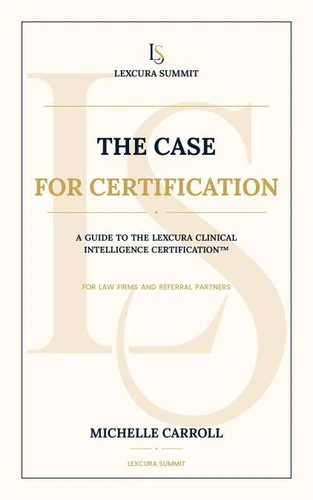
The Case for Certification
Par :Formats :
Disponible dans votre compte client Decitre ou Furet du Nord dès validation de votre commande. Le format ePub est :
- Compatible avec une lecture sur My Vivlio (smartphone, tablette, ordinateur)
- Compatible avec une lecture sur liseuses Vivlio
- Pour les liseuses autres que Vivlio, vous devez utiliser le logiciel Adobe Digital Edition. Non compatible avec la lecture sur les liseuses Kindle, Remarkable et Sony
 , qui est-ce ?
Notre partenaire de plateforme de lecture numérique où vous retrouverez l'ensemble de vos ebooks gratuitement
Pour en savoir plus sur nos ebooks, consultez notre aide en ligne ici
C'est si simple ! Lisez votre ebook avec l'app Vivlio sur votre tablette, mobile ou ordinateur :

- FormatePub
- ISBN8997229771
- EAN9798997229771
- Date de parution24/07/2026
- Protection num.pas de protection
- Infos supplémentairesepub
- ÉditeurMichelle Carroll
Résumé
For law firms and referral partners, retaining a medical-legal analyst has always required a certain amount of blind trust - a report arrives, organized and confident, but there's rarely a reliable way to know whether the analysis behind it was rigorous or just persuasive. The Case for Certification explains the credential built to close that gap. It introduces the Lexcura Clinical Intelligence Model¿, a structured seven-pillar methodology for reconstructing a patient's clinical story before any legal theory is built on top of it, and the Lexcura Certified Clinical Intelligence Analyst¿ (LCCIA¿) designation that verifies an analyst has mastered it.
This guide is written specifically for the people who rely on that work rather than perform it: hiring partners, general counsel, litigation support directors, and referral partners. It does not teach the underlying methodology - it answers the questions those decision-makers actually ask before extending trust to an outside analyst:What does this credential certify, and what does it not certify?Why does a consistent methodology matter more in medical-legal analysis than in most fields?What separates a certified analyst from an uncertified one?What does a candidate actually go through to earn the credential?How should a firm evaluate, engage, and build this credential into its own standards?Written by Michelle Carroll, founder of Lexcura Summit and originator of the Clinical Intelligence¿ discipline, this guide gives legal teams a clear, defensible way to evaluate the analysts they rely on - before the case, not during cross-examination.
This guide is written specifically for the people who rely on that work rather than perform it: hiring partners, general counsel, litigation support directors, and referral partners. It does not teach the underlying methodology - it answers the questions those decision-makers actually ask before extending trust to an outside analyst:What does this credential certify, and what does it not certify?Why does a consistent methodology matter more in medical-legal analysis than in most fields?What separates a certified analyst from an uncertified one?What does a candidate actually go through to earn the credential?How should a firm evaluate, engage, and build this credential into its own standards?Written by Michelle Carroll, founder of Lexcura Summit and originator of the Clinical Intelligence¿ discipline, this guide gives legal teams a clear, defensible way to evaluate the analysts they rely on - before the case, not during cross-examination.
A propos de Michelle Carroll

11,49 €
26,49 €
30,49 €
30,49 €
26,49 €
26,99 €
26,99 €