Nouveauté
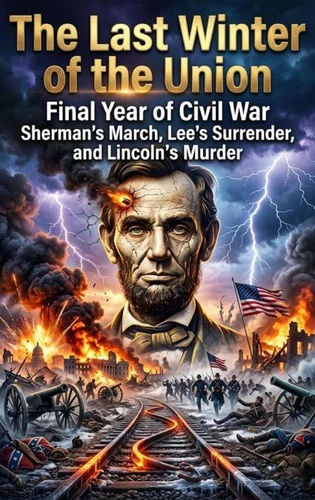
The Last Winter of the Union. Final Year of Civil War Sherman's March, Lee's Surrender, and Lincoln's Murder
Par :Formats :
Disponible dans votre compte client Decitre ou Furet du Nord dès validation de votre commande. Le format ePub est :
- Compatible avec une lecture sur My Vivlio (smartphone, tablette, ordinateur)
- Compatible avec une lecture sur liseuses Vivlio
- Pour les liseuses autres que Vivlio, vous devez utiliser le logiciel Adobe Digital Edition. Non compatible avec la lecture sur les liseuses Kindle, Remarkable et Sony
 , qui est-ce ?
Notre partenaire de plateforme de lecture numérique où vous retrouverez l'ensemble de vos ebooks gratuitement
Pour en savoir plus sur nos ebooks, consultez notre aide en ligne ici
C'est si simple ! Lisez votre ebook avec l'app Vivlio sur votre tablette, mobile ou ordinateur :

- Nombre de pages162
- FormatePub
- ISBN978-3-565-46452-4
- EAN9783565464524
- Date de parution28/05/2026
- Protection num.pas de protection
- Taille2 Mo
- Infos supplémentairesepub
- ÉditeurEmphaloz Publishing House
Résumé
This book tracks the final winter of the American Civil War, when Sherman's march, Lee's surrender, and Lincoln's murder together turned a grinding conflict into a settling national trauma. It asks how a single season transformed military victory into a fraught inheritance for a reunited but bitterly scarred country, tracing the overlapping rhythms of campaign, capitulation, and catastrophe.
The narrative centers on three intersecting processes: the logic of "total war" in Sherman's advance through Georgia and the Carolinas, the diplomatic-like ritual of surrender at Appomattox and other Southern capitulations, and the shockwaves of the assassination at Ford's Theatre and its aftermath.
Through telegraphs, diaries, and official records, the book shows how ordinary citizens, soldiers, and freed people parsed news of breakthroughs and murders in real time, building early myths of heroism, martyrdom, and resistance.
Through telegraphs, diaries, and official records, the book shows how ordinary citizens, soldiers, and freed people parsed news of breakthroughs and murders in real time, building early myths of heroism, martyrdom, and resistance.