
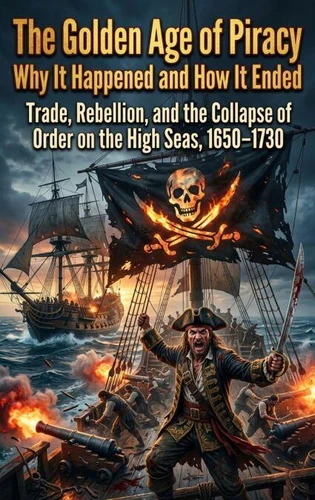
The Golden Age of Piracy: Why It Happened and How It Ended. Trade, Rebellion, and the Collapse of Order on the High Seas, 1650–1730
Par :Formats :
Disponible dans votre compte client Decitre ou Furet du Nord dès validation de votre commande. Le format ePub est :
- Compatible avec une lecture sur My Vivlio (smartphone, tablette, ordinateur)
- Compatible avec une lecture sur liseuses Vivlio
- Pour les liseuses autres que Vivlio, vous devez utiliser le logiciel Adobe Digital Edition. Non compatible avec la lecture sur les liseuses Kindle, Remarkable et Sony
 , qui est-ce ?
Notre partenaire de plateforme de lecture numérique où vous retrouverez l'ensemble de vos ebooks gratuitement
Pour en savoir plus sur nos ebooks, consultez notre aide en ligne ici
C'est si simple ! Lisez votre ebook avec l'app Vivlio sur votre tablette, mobile ou ordinateur :

- Nombre de pages161
- FormatePub
- ISBN978-3-565-32690-7
- EAN9783565326907
- Date de parution15/03/2026
- Protection num.pas de protection
- Taille2 Mo
- Infos supplémentairesepub
- ÉditeurEmphaloz Publishing House
Résumé
Between the late seventeenth and early eighteenth centuries, pirates ruled the Atlantic world-from the Caribbean to the Indian Ocean, from Nassau to Madagascar. Yet piracy was not simply chaos at sea-it was a symptom of global change. The so-called "Golden Age" emerged in the wake of imperial wars, collapsing economies, and the brutal transformation of maritime labor. When kings no longer paid sailors, they paid themselves.
This book explores the social, economic, and political roots of piracy, explaining how former privateers, enslaved Africans, outcast sailors, and runaway servants created floating communities that briefly defied imperial control.
Drawing on Admiralty Court records, ships' logs, and contemporary pamphlets, it recreates their world-its shipboard democracies, violent mutinies, and precarious alliances. By the 1730s, the same empires that had tolerated piracy turned to eradicate it. Through a coordinated campaign of naval suppression and propaganda, they re-established control of the seas-replacing the black flag with the merchant ensign.
The age ended, but its legends endured, shaping the modern mythology of freedom and resistance on the ocean frontier.
Drawing on Admiralty Court records, ships' logs, and contemporary pamphlets, it recreates their world-its shipboard democracies, violent mutinies, and precarious alliances. By the 1730s, the same empires that had tolerated piracy turned to eradicate it. Through a coordinated campaign of naval suppression and propaganda, they re-established control of the seas-replacing the black flag with the merchant ensign.
The age ended, but its legends endured, shaping the modern mythology of freedom and resistance on the ocean frontier.
A propos de Elena Brooks













0,99 €