
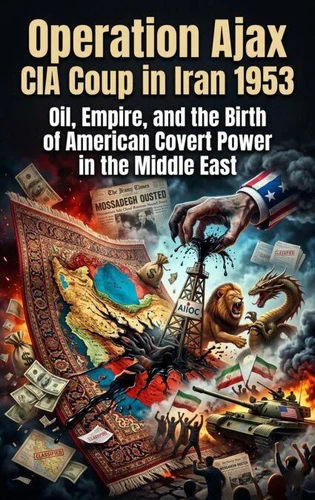
Operation Ajax: CIA Coup in Iran 1953. Oil, Empire, and the Birth of American Covert Power in the Middle East
Par :Formats :
Disponible dans votre compte client Decitre ou Furet du Nord dès validation de votre commande. Le format ePub est :
- Compatible avec une lecture sur My Vivlio (smartphone, tablette, ordinateur)
- Compatible avec une lecture sur liseuses Vivlio
- Pour les liseuses autres que Vivlio, vous devez utiliser le logiciel Adobe Digital Edition. Non compatible avec la lecture sur les liseuses Kindle, Remarkable et Sony
 , qui est-ce ?
Notre partenaire de plateforme de lecture numérique où vous retrouverez l'ensemble de vos ebooks gratuitement
Pour en savoir plus sur nos ebooks, consultez notre aide en ligne ici
C'est si simple ! Lisez votre ebook avec l'app Vivlio sur votre tablette, mobile ou ordinateur :

- Nombre de pages225
- FormatePub
- ISBN978-3-565-32670-9
- EAN9783565326709
- Date de parution15/03/2026
- Protection num.pas de protection
- Taille2 Mo
- Infos supplémentairesepub
- ÉditeurEmphaloz Publishing House
Résumé
In August 1953, the CIA and British intelligence orchestrated the overthrow of Iran's democratically elected Prime Minister, Mohammad Mossadegh. The operation-code-named Ajax-was the first successful U. S.-engineered coup of the Cold War, executed to protect Western oil interests and prevent perceived Soviet expansion. The result would shape the geopolitics of the Middle East for decades, replacing democracy with monarchy and sowing the seeds of revolution.
This book traces Operation Ajax from planning rooms in Washington and London to the streets of Tehran, drawing on declassified intelligence reports, memoirs of operatives, and Iranian eyewitness testimony.
It exposes the network of bribes, propaganda, and provocations that toppled Mossadegh's government and restored Shah Mohammad Reza Pahlavi to absolute power. More than a story of spies and oil, this is a history of the moment when covert action became a cornerstone of American foreign policy. The coup that seemed a triumph of Cold War strategy ultimately became a cautionary tale-one whose reverberations continue to define U.
S.-Iran relations to this day.
It exposes the network of bribes, propaganda, and provocations that toppled Mossadegh's government and restored Shah Mohammad Reza Pahlavi to absolute power. More than a story of spies and oil, this is a history of the moment when covert action became a cornerstone of American foreign policy. The coup that seemed a triumph of Cold War strategy ultimately became a cautionary tale-one whose reverberations continue to define U.
S.-Iran relations to this day.
A propos de Elena Brooks









0,99 €