
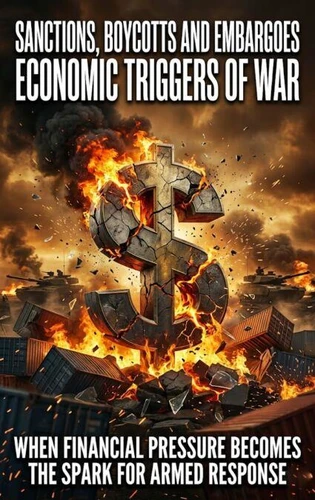
Sanctions, Boycotts and Embargoes: Economic Triggers of War. When financial pressure becomes the spark for armed response
Par :Formats :
Disponible dans votre compte client Decitre ou Furet du Nord dès validation de votre commande. Le format ePub est :
- Compatible avec une lecture sur My Vivlio (smartphone, tablette, ordinateur)
- Compatible avec une lecture sur liseuses Vivlio
- Pour les liseuses autres que Vivlio, vous devez utiliser le logiciel Adobe Digital Edition. Non compatible avec la lecture sur les liseuses Kindle, Remarkable et Sony
 , qui est-ce ?
Notre partenaire de plateforme de lecture numérique où vous retrouverez l'ensemble de vos ebooks gratuitement
Pour en savoir plus sur nos ebooks, consultez notre aide en ligne ici
C'est si simple ! Lisez votre ebook avec l'app Vivlio sur votre tablette, mobile ou ordinateur :

- Nombre de pages213
- FormatePub
- ISBN978-3-565-37319-2
- EAN9783565373192
- Date de parution30/03/2026
- Protection num.pas de protection
- Taille2 Mo
- Infos supplémentairesepub
- ÉditeurEmphaloz Publishing House
Résumé
Wars do not always begin with gunfire. Often, they start with trade. This book investigates how economic coercion-through sanctions, boycotts, and embargoes-has served as both a weapon and a provocation throughout history. From the naval blockades of the 19th century to oil embargoes and modern financial restrictions, "Sanctions, Boycotts and Embargoes" traces how pressure meant to prevent conflict can instead escalate it.
Drawing on diplomatic archives, case studies, and economic data, it reveals how nations interpret financial measures as threats to sovereignty, prompting retaliation rather than restraint. The book exposes the thin line between deterrence and provocation, showing that economic warfare often reshapes alliances, destabilizes regions, and sets the stage for open conflict. It is a measured study of how money, not arms, can ignite global crises.
Drawing on diplomatic archives, case studies, and economic data, it reveals how nations interpret financial measures as threats to sovereignty, prompting retaliation rather than restraint. The book exposes the thin line between deterrence and provocation, showing that economic warfare often reshapes alliances, destabilizes regions, and sets the stage for open conflict. It is a measured study of how money, not arms, can ignite global crises.
A propos de Elena Brooks











0,99 €