SOLDES
Jusqu'à -70% sur une sélection d'articles*

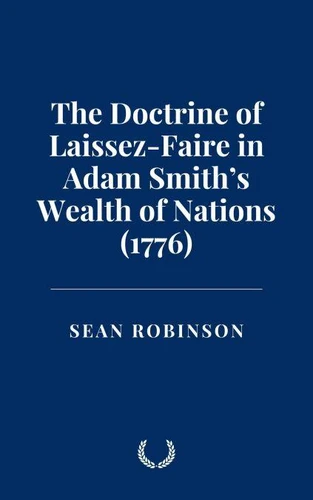
The Doctrine of Laissez-Faire in Adam Smith’s Wealth of Nations (1776)
Par :Formats :
Disponible dans votre compte client Decitre ou Furet du Nord dès validation de votre commande. Le format ePub est :
- Compatible avec une lecture sur My Vivlio (smartphone, tablette, ordinateur)
- Compatible avec une lecture sur liseuses Vivlio
- Pour les liseuses autres que Vivlio, vous devez utiliser le logiciel Adobe Digital Edition. Non compatible avec la lecture sur les liseuses Kindle, Remarkable et Sony
 , qui est-ce ?
Notre partenaire de plateforme de lecture numérique où vous retrouverez l'ensemble de vos ebooks gratuitement
Pour en savoir plus sur nos ebooks, consultez notre aide en ligne ici
C'est si simple ! Lisez votre ebook avec l'app Vivlio sur votre tablette, mobile ou ordinateur :

- FormatePub
- ISBN8230718062
- EAN9798230718062
- Date de parution22/01/2025
- Protection num.pas de protection
- Infos supplémentairesepub
- ÉditeurIndependently Published
Résumé
This book explores the foundational economic principles established by Adam Smith in his seminal work, The Wealth of Nations (1776), and examines their enduring impact on economic thought, policy, and practice over the course of more than two centuries. Through a detailed analysis of Smith's doctrine of laissez-faire economics, the book highlights Smith's belief in the efficiency of free markets, the role of competition, and the importance of government intervention to correct market failures, protect public welfare, and ensure social justice.
The work also addresses Smith's moral philosophy, emphasizing his concerns with inequality, exploitation, and the ethical dimensions of economic activity, offering a nuanced view of capitalism that recognizes both its potential for prosperity and its social costs. The book traces the evolution of Smith's ideas through the development of classical economics, the critiques of Marx, the rise of Keynesianism, and the resurgence of neoliberalism in the 20th century.
It also discusses how Smith's economic theories have been adapted and challenged in response to industrialization, globalization, and contemporary issues such as climate change, inequality, and technological disruption. By engaging with both historical and modern economic debates, the book illustrates how Smith's work remains relevant today, providing a framework for understanding the balance between free markets and government regulation, as well as the moral responsibilities inherent in economic systems.
Through an exploration of Smith's influence on both the intellectual history of economics and the practical realities of policy, the book presents a comprehensive view of how his vision of market economies, tempered by ethical considerations and governmental oversight, continues to shape contemporary discussions about capitalism, social responsibility, and economic governance. Ultimately, this work underscores the lasting legacy of Adam Smith's thought in addressing the complexities of the modern economic world, offering insights into the ongoing tension between market efficiency and social equity.
The work also addresses Smith's moral philosophy, emphasizing his concerns with inequality, exploitation, and the ethical dimensions of economic activity, offering a nuanced view of capitalism that recognizes both its potential for prosperity and its social costs. The book traces the evolution of Smith's ideas through the development of classical economics, the critiques of Marx, the rise of Keynesianism, and the resurgence of neoliberalism in the 20th century.
It also discusses how Smith's economic theories have been adapted and challenged in response to industrialization, globalization, and contemporary issues such as climate change, inequality, and technological disruption. By engaging with both historical and modern economic debates, the book illustrates how Smith's work remains relevant today, providing a framework for understanding the balance between free markets and government regulation, as well as the moral responsibilities inherent in economic systems.
Through an exploration of Smith's influence on both the intellectual history of economics and the practical realities of policy, the book presents a comprehensive view of how his vision of market economies, tempered by ethical considerations and governmental oversight, continues to shape contemporary discussions about capitalism, social responsibility, and economic governance. Ultimately, this work underscores the lasting legacy of Adam Smith's thought in addressing the complexities of the modern economic world, offering insights into the ongoing tension between market efficiency and social equity.
A propos de Sean Robinson


2,99 €
2,99 €

2,99 €







2,99 €
2,99 €

2,99 €