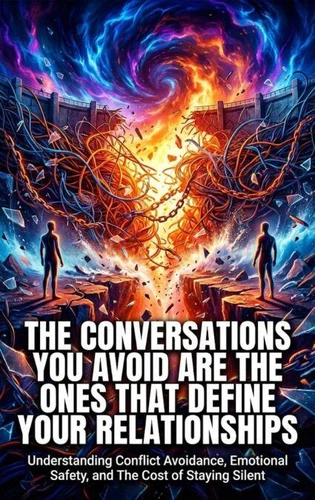
The Conversations You Avoid Are The Ones That Define Your Relationships. Understanding Conflict Avoidance, Emotional Safety, and The Cost of Staying Silent
Par :Formats :
Disponible dans votre compte client Decitre ou Furet du Nord dès validation de votre commande. Le format ePub est :
- Compatible avec une lecture sur My Vivlio (smartphone, tablette, ordinateur)
- Compatible avec une lecture sur liseuses Vivlio
- Pour les liseuses autres que Vivlio, vous devez utiliser le logiciel Adobe Digital Edition. Non compatible avec la lecture sur les liseuses Kindle, Remarkable et Sony
 , qui est-ce ?
Notre partenaire de plateforme de lecture numérique où vous retrouverez l'ensemble de vos ebooks gratuitement
Pour en savoir plus sur nos ebooks, consultez notre aide en ligne ici
C'est si simple ! Lisez votre ebook avec l'app Vivlio sur votre tablette, mobile ou ordinateur :

- Nombre de pages210
- FormatePub
- ISBN978-3-565-20367-3
- EAN9783565203673
- Date de parution28/01/2026
- Protection num.pas de protection
- Taille2 Mo
- Infos supplémentairesepub
- ÉditeurEmphaloz Publishing House
Résumé
Difficult conversations get postponed, softened, or avoided entirely-not because you don't care, but because you care too much about what might happen if you speak. The fear of conflict, rejection, or making things worse keeps important truths unspoken. Meanwhile, resentment builds, distance grows, and the relationship suffers from what isn't said more than what is.
This book explores why some conversations feel impossible to have, examining the role of conflict patterns learned in childhood, nervous system activation during confrontation, and the ways people-pleasing or withdrawal became survival strategies.
It draws on attachment theory and communication research to reframe difficult conversations not as threats to connection but as opportunities to deepen it-when approached with clarity and care. Rather than offering scripts or persuasion tactics, it examines what makes honesty feel dangerous. It explores the difference between speaking to be heard and speaking to protect yourself, between expressing hurt and weaponizing it, between setting boundaries and punishing someone for needing them. For those who rehearse conversations endlessly but never have them, who feel misunderstood because they've never been direct, or who sacrifice their needs to keep the peace, this book offers insight into why avoidance feels safer than honesty-and what becomes possible when you choose differently.
It draws on attachment theory and communication research to reframe difficult conversations not as threats to connection but as opportunities to deepen it-when approached with clarity and care. Rather than offering scripts or persuasion tactics, it examines what makes honesty feel dangerous. It explores the difference between speaking to be heard and speaking to protect yourself, between expressing hurt and weaponizing it, between setting boundaries and punishing someone for needing them. For those who rehearse conversations endlessly but never have them, who feel misunderstood because they've never been direct, or who sacrifice their needs to keep the peace, this book offers insight into why avoidance feels safer than honesty-and what becomes possible when you choose differently.
A propos de Alina Frost















8,99 €