
Alina Frost is a nonfiction author who writes about self-discovery, emotional strength, and modern life challenges. Her work combines gentle reflection with practical insight, encouraging readers to build confidence, resilience, and a deeper understanding of themselves.
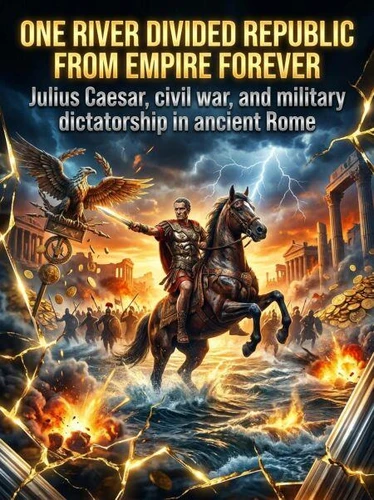
One River Divided Republic from Empire Forever. Julius Caesar, civil war, and military dictatorship in ancient Rome
Par :Formats :
Disponible dans votre compte client Decitre ou Furet du Nord dès validation de votre commande. Le format ePub est :
- Compatible avec une lecture sur My Vivlio (smartphone, tablette, ordinateur)
- Compatible avec une lecture sur liseuses Vivlio
- Pour les liseuses autres que Vivlio, vous devez utiliser le logiciel Adobe Digital Edition. Non compatible avec la lecture sur les liseuses Kindle, Remarkable et Sony
 , qui est-ce ?
Notre partenaire de plateforme de lecture numérique où vous retrouverez l'ensemble de vos ebooks gratuitement
Pour en savoir plus sur nos ebooks, consultez notre aide en ligne ici
C'est si simple ! Lisez votre ebook avec l'app Vivlio sur votre tablette, mobile ou ordinateur :

- Nombre de pages200
- FormatePub
- ISBN978-3-565-48563-5
- EAN9783565485635
- Date de parution08/06/2026
- Protection num.pas de protection
- Taille1 Mo
- Infos supplémentairesepub
- ÉditeurEmphaloz Publishing House
Résumé
When Julius Caesar crossed the Rubicon River, Rome entered a conflict that would permanently transform its political order. What began as a struggle between rival elites became the end of republican government itself and the beginning of imperial autocracy.
This account reconstructs the final years of the Roman Republic through the decisions, alliances, and military campaigns that led to civil war.
Caesar's growing influence alarmed conservative senators who feared the concentration of authority in a single commander. Political negotiations collapsed as competing factions increasingly relied on military force rather than constitutional compromise. The book also examines how Rome's expanding empire reshaped the nature of political leadership. Victorious generals commanded immense wealth, loyal armies, and direct public popularity unavailable to traditional senatorial institutions.
Civil conflict therefore emerged from structural changes that made republican restraint increasingly difficult to maintain. The rise of Caesar appears not merely as the ambition of one individual, but as the culmination of decades of instability in a republic struggling to govern an empire larger than its political system could safely manage.
Caesar's growing influence alarmed conservative senators who feared the concentration of authority in a single commander. Political negotiations collapsed as competing factions increasingly relied on military force rather than constitutional compromise. The book also examines how Rome's expanding empire reshaped the nature of political leadership. Victorious generals commanded immense wealth, loyal armies, and direct public popularity unavailable to traditional senatorial institutions.
Civil conflict therefore emerged from structural changes that made republican restraint increasingly difficult to maintain. The rise of Caesar appears not merely as the ambition of one individual, but as the culmination of decades of instability in a republic struggling to govern an empire larger than its political system could safely manage.
A propos de Alina Frost



















8,99 €