SOLDES
Jusqu'à -70% sur une sélection d'articles*

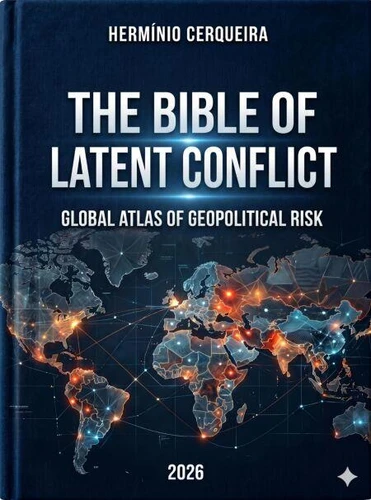
THE BIBLE OF LATENT CONFLICT. Global Atlas of Geopolitical Risk
Par :Formats :
Disponible dans votre compte client Decitre ou Furet du Nord dès validation de votre commande. Le format ePub est :
- Compatible avec une lecture sur My Vivlio (smartphone, tablette, ordinateur)
- Compatible avec une lecture sur liseuses Vivlio
- Pour les liseuses autres que Vivlio, vous devez utiliser le logiciel Adobe Digital Edition. Non compatible avec la lecture sur les liseuses Kindle, Remarkable et Sony
 , qui est-ce ?
Notre partenaire de plateforme de lecture numérique où vous retrouverez l'ensemble de vos ebooks gratuitement
Pour en savoir plus sur nos ebooks, consultez notre aide en ligne ici
C'est si simple ! Lisez votre ebook avec l'app Vivlio sur votre tablette, mobile ou ordinateur :

- Nombre de pages1139
- FormatePub
- ISBN978-94-038-8880-4
- EAN9789403888804
- Date de parution23/04/2026
- Protection num.Digital Watermarking
- Taille4 Mo
- Infos supplémentairesepub
- ÉditeurBookmundo
Résumé
Without any exaggeration, sovereignty is the fundamental concept that structures the entire understanding of international relations in the modern world. From the birth of the Westphalian state system in 1648 to the present day, the fundamental question of "who is in charge" within a defined territory remains the most important-and, at the same time, the most contested-question in international politics.
We argue that this primacy of sovereignty is not merely a legal convention or a political contrivance of the 17th and 18th centuries, but rather a fundamental geopolitical reality rooted in the nature of territorial power and in the logical impossibility of having multiple supreme authorities acting simultaneously over the same space. However, the concept that seemed so clear to Westphalia-one sovereign with absolute and indivisible power within a defined territory-is proving increasingly problematic, contested, and eroded in the 21st century.
Moreover, this erosion is not merely theoretical or academic; its practical consequences are starkly evident in multiple simultaneous forms.
We argue that this primacy of sovereignty is not merely a legal convention or a political contrivance of the 17th and 18th centuries, but rather a fundamental geopolitical reality rooted in the nature of territorial power and in the logical impossibility of having multiple supreme authorities acting simultaneously over the same space. However, the concept that seemed so clear to Westphalia-one sovereign with absolute and indivisible power within a defined territory-is proving increasingly problematic, contested, and eroded in the 21st century.
Moreover, this erosion is not merely theoretical or academic; its practical consequences are starkly evident in multiple simultaneous forms.