
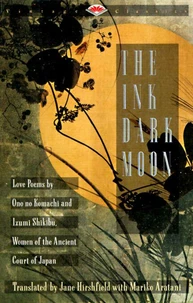
Jane Hirshfield, chancelière de l'Académie des Poètes Américains, a reçu nombre de prix. Czeslaw Milosz disait d'elle : Jane figure parmi les étoiles les plus brillantes de ma fratrie de poètes californiens. Le premier poème de Jane Hirshfield paraît en 1973, peu de temps après qu'elle ne quitte Princeton, son diplôme de Lettres en main. Elle a fait partie de la première classe de cette prestigieuse Université à accueillir des femmes. Cependant, peu de temps après, elle met de côté son écriture et part au Zen Centre de San Francisco pour huit ans. Elle pensait qu'elle ne pourrait pas être un bon poète, sans approfondir au préalable sa connaissance de la nature humaine. Repensant à ces années de pratique elle dira plus tard qu'elles ne l'auront pas "immunisée" contre la souffrance du monde dont nous sommes tous témoins. Elle nous dit que "la vie continue à être terriblement dure et douloureuse" et sa très grande humanité l'enjoint d'en témoigner. Pour Jane Hirshfield, toute poésie se construit à partir d'une vie bien vécue et il fallait d'abord qu'elle découvre ce que signifiait vivre. Ses nombreuses publications (*) depuis 1988 sont toujours empreintes de cette affirmation. Ses poèmes paraissent régulièrement dans (entre autres) le New Yorker, Atlantic Monthly, Poetry, la American Poetry Review, Slate, Orion, McSweeneys aux USA et dans le Times Literary Supplement au Royaume-Uni et le Paris Review en France, ainsi que dans de nombreuses anthologies et livres universitaires. Elle a enseigné dans plusieurs universités : l'Université de California à Berkeley, l'Université de San Francisco, et participé aux séminaires d'écriture à Bennington Master of Fine Arts. . . Elle a été poète en résidence à Duke University, à l'Université d'Alaska, à l'Université de Virginie. . . Nommée Chancelière de l'Académie des Poètes Américains, Jane a aussi reçu le Prix Donald Hall- Jane Kenyon de Poésie Américaine, ainsi que de nombreuses bourses universitaires et diverses autres distinctions et prix littéraires (**). Elle a écrit trois livres d'essais sur la poésie et traduit (avec Mariko Aratani) un recueil de poèmes courtois japonais, The Ink Dark Moon. Elle continue son travail de rédactrice et d'éditrice (commencé en 1983) et son e-book The Art of Haïku rencontre un très vif succès depuis sa publication en 2011. Elle nous a offert deux livres en mars 2015, un recueil de poèmes, The Beauty et un recueil d'essais, Ten Windows : How Great Poems Transform the World.
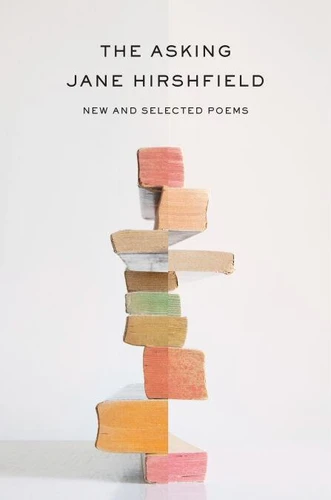
The Asking. New and Selected Poems
Par :Formats :
Disponible dans votre compte client Decitre ou Furet du Nord dès validation de votre commande. Le format ePub protégé est :
- Compatible avec une lecture sur My Vivlio (smartphone, tablette, ordinateur)
- Compatible avec une lecture sur liseuses Vivlio
- Pour les liseuses autres que Vivlio, vous devez utiliser le logiciel Adobe Digital Edition. Non compatible avec la lecture sur les liseuses Kindle, Remarkable et Sony
- Non compatible avec un achat hors France métropolitaine
 , qui est-ce ?
Notre partenaire de plateforme de lecture numérique où vous retrouverez l'ensemble de vos ebooks gratuitement
Pour en savoir plus sur nos ebooks, consultez notre aide en ligne ici
C'est si simple ! Lisez votre ebook avec l'app Vivlio sur votre tablette, mobile ou ordinateur :

- Nombre de pages368
- FormatePub
- ISBN978-0-593-53596-7
- EAN9780593535967
- Date de parution12/09/2023
- Protection num.Adobe DRM
- Taille945 Ko
- Infos supplémentairesepub
- ÉditeurKnopf
Résumé
The long-awaited new and selected collection by the author of "some of the most important poetry in the world today" (The New York Times Magazine), assaying the ranges of our shared and borrowed lives: our bonds of eros and responsibilities to the planet; the singing dictions and searchlight dimensions of perception; the willing plunge into an existence both perishing and beloved, dazzling "even now, even here"In an era of algorithm, assertion, silo, and induced distraction, Jane Hirshfield's poems bring a much-needed awakening response, actively countering narrowness.
The Asking takes its title from the close of one of its thirty-one new poems: "don't despair of this falling world, not yet / didn't it give you the asking." Interrogating language and life, pondering beauty amid bewilderment and transcendence amid transience, Hirshfield offers a signature investigation of the conditions, contradictions, uncertainties, and astonishments that shape our existence. A leading advocate for the biosphere and the alliance of science and imagination, she brings to both inner and outer quandaries an abiding compass: the choice to embrace what is, to face with courage, curiosity, and a sense of kinship whatever comes. In poems that consider the smallest ant and the vastness of time, hunger and bounty, physics, war, and love in myriad forms, this collection-drawing from nine previous books and five decades of writing-brings the insights and slant-lights that come to us only through poetry's arc, delve, and tact; through a vision both close and sweeping; through music-inflected thought and recombinant leap. With its quietly magnifying brushwork and numinous clarities, The Asking expands our awareness of both breakage's grief and the possibility for repair.
The Asking takes its title from the close of one of its thirty-one new poems: "don't despair of this falling world, not yet / didn't it give you the asking." Interrogating language and life, pondering beauty amid bewilderment and transcendence amid transience, Hirshfield offers a signature investigation of the conditions, contradictions, uncertainties, and astonishments that shape our existence. A leading advocate for the biosphere and the alliance of science and imagination, she brings to both inner and outer quandaries an abiding compass: the choice to embrace what is, to face with courage, curiosity, and a sense of kinship whatever comes. In poems that consider the smallest ant and the vastness of time, hunger and bounty, physics, war, and love in myriad forms, this collection-drawing from nine previous books and five decades of writing-brings the insights and slant-lights that come to us only through poetry's arc, delve, and tact; through a vision both close and sweeping; through music-inflected thought and recombinant leap. With its quietly magnifying brushwork and numinous clarities, The Asking expands our awareness of both breakage's grief and the possibility for repair.
A propos de Jane Hirshfield
The Ink Dark Moon
E-book
8,99 €
Ledger. Poems
E-book
12,61 €
11,46 €
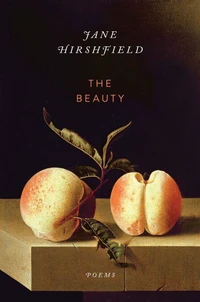
The Beauty. Poems
E-book
5,72 €
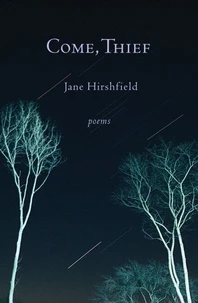
Come, Thief. Poems
E-book
6,87 €
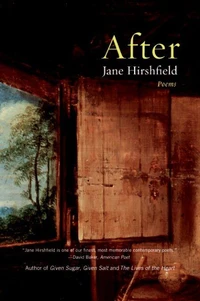
After. Poems
E-book
9,99 €
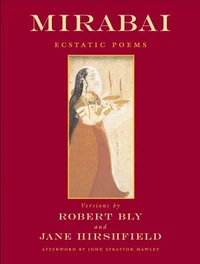
Mirabai. Ecstatic Poems
E-book
13,74 €
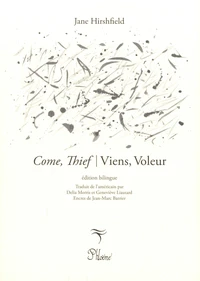
Viens, Voleur
Grand Format
28,00 €