Africa stands at a decisive moment in its economic history. Despite vast natural resources, a young population, and expanding markets, the continent remains divided by monetary borders that limit trade, weaken collective bargaining power, and expose African economies to external shocks. More than forty national currencies circulate across Africa, many of them vulnerable to inflation, volatility, and dependency on foreign reserve systems.
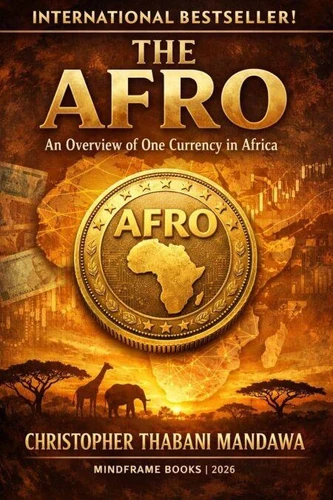
This fragmentation continues to constrain Africa's full economic potential. The Afro: An Overview of One Currency in Africa explores the idea of a single continental currency as a strategic response to these challenges. The Afro is presented not merely as a financial instrument, but as a foundation for deeper integration, stability, and shared prosperity. By unifying Africa's monetary system, the Afro offers the possibility of stronger intra African trade, reduced transaction costs, increased investment confidence, and greater economic sovereignty.
This book examines the historical roots of Africa's monetary systems, the structural weaknesses of the current order, and the practical pathways toward a unified currency. It balances vision with realism, addressing both the opportunities and the risks involved. Ultimately, this work invites policymakers, scholars, and citizens to consider whether monetary unity can become a catalyst for Africa's long term development, dignity, and global influence.
Africa stands at a decisive moment in its economic history. Despite vast natural resources, a young population, and expanding markets, the continent remains divided by monetary borders that limit trade, weaken collective bargaining power, and expose African economies to external shocks. More than forty national currencies circulate across Africa, many of them vulnerable to inflation, volatility, and dependency on foreign reserve systems.
This fragmentation continues to constrain Africa's full economic potential. The Afro: An Overview of One Currency in Africa explores the idea of a single continental currency as a strategic response to these challenges. The Afro is presented not merely as a financial instrument, but as a foundation for deeper integration, stability, and shared prosperity. By unifying Africa's monetary system, the Afro offers the possibility of stronger intra African trade, reduced transaction costs, increased investment confidence, and greater economic sovereignty.
This book examines the historical roots of Africa's monetary systems, the structural weaknesses of the current order, and the practical pathways toward a unified currency. It balances vision with realism, addressing both the opportunities and the risks involved. Ultimately, this work invites policymakers, scholars, and citizens to consider whether monetary unity can become a catalyst for Africa's long term development, dignity, and global influence.


 , qui est-ce ?