From the early years of independence to the present day, military takeovers have repeatedly reshaped governments, interrupted democratic processes, and redefined the relationship between power and the state across the continent. While often portrayed as sudden and irrational seizures of power, coups d'État are rarely spontaneous events. They are the outcomes of deep political, economic, and institutional crises that reflect broader struggles over authority, legitimacy, and governance.
In Africa, the prevalence of coups cannot be understood without examining the legacies of colonial rule, which left behind weak political institutions, politicized militaries, and fragile national identities. Post-independence leaders inherited states designed for control rather than participation, and in many cases failed to transform them into inclusive and accountable systems. Within this environment, the military frequently emerged as both a political actor and a self-proclaimed guardian of national stability, often justifying its interventions as necessary correctives to civilian misrule.
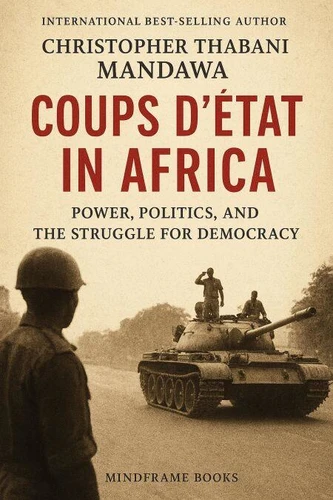
This book explores coups d'État in Africa not as isolated acts of military ambition, but as political phenomena deeply embedded in the continent's historical and social realities. Through detailed case studies and regional analyses, it examines why coups occur, how they are executed, and what consequences they have for democracy, development, and civil-military relations. By placing African coups within both local and global contexts, this study seeks to move beyond stereotypes and provide a nuanced understanding of power, politics, and the ongoing struggle for democratic governance in Africa.
From the early years of independence to the present day, military takeovers have repeatedly reshaped governments, interrupted democratic processes, and redefined the relationship between power and the state across the continent. While often portrayed as sudden and irrational seizures of power, coups d'État are rarely spontaneous events. They are the outcomes of deep political, economic, and institutional crises that reflect broader struggles over authority, legitimacy, and governance.
In Africa, the prevalence of coups cannot be understood without examining the legacies of colonial rule, which left behind weak political institutions, politicized militaries, and fragile national identities. Post-independence leaders inherited states designed for control rather than participation, and in many cases failed to transform them into inclusive and accountable systems. Within this environment, the military frequently emerged as both a political actor and a self-proclaimed guardian of national stability, often justifying its interventions as necessary correctives to civilian misrule.
This book explores coups d'État in Africa not as isolated acts of military ambition, but as political phenomena deeply embedded in the continent's historical and social realities. Through detailed case studies and regional analyses, it examines why coups occur, how they are executed, and what consequences they have for democracy, development, and civil-military relations. By placing African coups within both local and global contexts, this study seeks to move beyond stereotypes and provide a nuanced understanding of power, politics, and the ongoing struggle for democratic governance in Africa.


 , qui est-ce ?