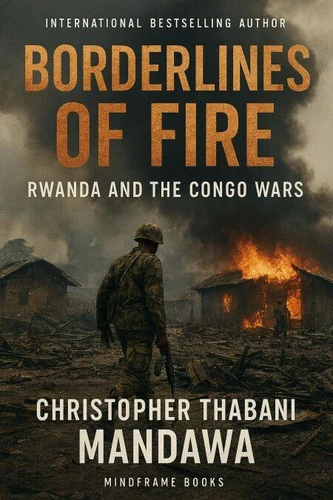
The Rwanda Congo conflict is one of the deadliest and most prolonged crises since the Second World War, claiming millions of lives through violence, displacement, disease, and economic collapse. Yet despite its scale, it remains widely misunderstood outside the Great Lakes region. Too often, it is simplified as an ancient or "tribal" war, a narrative that obscures the deeper forces at work. This book argues that the conflict is not driven by ethnicity alone, but by a complex interaction of historical legacies, state failure, regional power politics, security fears rooted in the 1994 Rwandan genocide, and the political economy of natural resources.
Colonial borders, postcolonial governance failures, cross border insurgencies, and global demand for minerals have all shaped a war that is both local and international in character. The book draws on a wide range of sources to present a balanced and rigorous account. These include United Nations reports, academic scholarship, investigative journalism, official government statements, and testimonies from survivors and local actors.
Because the conflict is marked by competing narratives, propaganda, and restricted access to conflict zones, the book critically evaluates sources, highlights areas of uncertainty, and distinguishes between established facts and contested claims. Particular care is taken to treat survivor accounts ethically and responsibly. The book is structured in six parts. It begins with historical foundations, moves through the major wars and armed groups, examines humanitarian and social consequences, analyzes regional and international politics, presents focused case studies, and concludes with realistic pathways toward peace, accountability, and regional stability.
The Rwanda Congo conflict is one of the deadliest and most prolonged crises since the Second World War, claiming millions of lives through violence, displacement, disease, and economic collapse. Yet despite its scale, it remains widely misunderstood outside the Great Lakes region. Too often, it is simplified as an ancient or "tribal" war, a narrative that obscures the deeper forces at work. This book argues that the conflict is not driven by ethnicity alone, but by a complex interaction of historical legacies, state failure, regional power politics, security fears rooted in the 1994 Rwandan genocide, and the political economy of natural resources.
Colonial borders, postcolonial governance failures, cross border insurgencies, and global demand for minerals have all shaped a war that is both local and international in character. The book draws on a wide range of sources to present a balanced and rigorous account. These include United Nations reports, academic scholarship, investigative journalism, official government statements, and testimonies from survivors and local actors.
Because the conflict is marked by competing narratives, propaganda, and restricted access to conflict zones, the book critically evaluates sources, highlights areas of uncertainty, and distinguishes between established facts and contested claims. Particular care is taken to treat survivor accounts ethically and responsibly. The book is structured in six parts. It begins with historical foundations, moves through the major wars and armed groups, examines humanitarian and social consequences, analyzes regional and international politics, presents focused case studies, and concludes with realistic pathways toward peace, accountability, and regional stability.

 , qui est-ce ?