Emily Rivers is an English-language nonfiction author whose work explores personal growth, emotional resilience, and the subtle psychological patterns that shape everyday life. Known for her calm and reflective writing style, she combines practical insight with narrative warmth, creating books that encourage thoughtful self-examination without drifting into empty motivational clichés. Emily often writes about change, identity, and the quiet ways people rebuild meaning during uncertain seasons of life.
Nouveauté
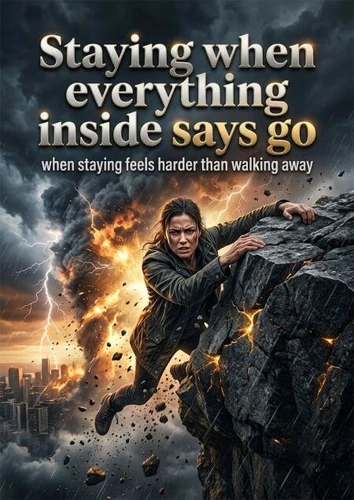
Staying when everything inside says go. when staying feels harder than walking away
Par :Formats :
Disponible dans votre compte client Decitre ou Furet du Nord dès validation de votre commande. Le format ePub est :
- Compatible avec une lecture sur My Vivlio (smartphone, tablette, ordinateur)
- Compatible avec une lecture sur liseuses Vivlio
- Pour les liseuses autres que Vivlio, vous devez utiliser le logiciel Adobe Digital Edition. Non compatible avec la lecture sur les liseuses Kindle, Remarkable et Sony
 , qui est-ce ?
Notre partenaire de plateforme de lecture numérique où vous retrouverez l'ensemble de vos ebooks gratuitement
Pour en savoir plus sur nos ebooks, consultez notre aide en ligne ici
C'est si simple ! Lisez votre ebook avec l'app Vivlio sur votre tablette, mobile ou ordinateur :

- Nombre de pages184
- FormatePub
- ISBN978-3-565-59007-0
- EAN9783565590070
- Date de parution26/07/2026
- Protection num.pas de protection
- Taille974 Ko
- Infos supplémentairesepub
- ÉditeurEmphaloz Publishing House
Résumé
You are both standing in the kitchen. The fight is over. But something is still unsettled, hanging between you like a question neither of you knows how to ask. You want to reach out. You also want to protect yourself. So you wait. And the silence grows.
This is the moment most relationship advice overlooks. Everyone talks about how to fight fair, what words to use, how to breathe before you speak.
But no one talks about what to do when the storm has passed and you are left with the wreckage. The hardest part is not the argument itself. It is the return to connection. It is trusting that you can be vulnerable again with someone who just hurt you. This book is an honest exploration of conflict aftermath. It looks at why repair sometimes fails, what shame does to your ability to apologize, and how couples can rebuild trust not by forgetting the fight but by understanding what it revealed.
You will find no scripts for the perfect apology here. Instead, you will learn how to listen to your own defensiveness, how to set boundaries without building walls, and how to let closeness back in when every instinct says to stay away. Repair is possible not when you agree, but when you choose each other anyway.
But no one talks about what to do when the storm has passed and you are left with the wreckage. The hardest part is not the argument itself. It is the return to connection. It is trusting that you can be vulnerable again with someone who just hurt you. This book is an honest exploration of conflict aftermath. It looks at why repair sometimes fails, what shame does to your ability to apologize, and how couples can rebuild trust not by forgetting the fight but by understanding what it revealed.
You will find no scripts for the perfect apology here. Instead, you will learn how to listen to your own defensiveness, how to set boundaries without building walls, and how to let closeness back in when every instinct says to stay away. Repair is possible not when you agree, but when you choose each other anyway.