Emily Rivers is an English-language nonfiction author whose work explores personal growth, emotional resilience, and the subtle psychological patterns that shape everyday life. Known for her calm and reflective writing style, she combines practical insight with narrative warmth, creating books that encourage thoughtful self-examination without drifting into empty motivational clichés. Emily often writes about change, identity, and the quiet ways people rebuild meaning during uncertain seasons of life.
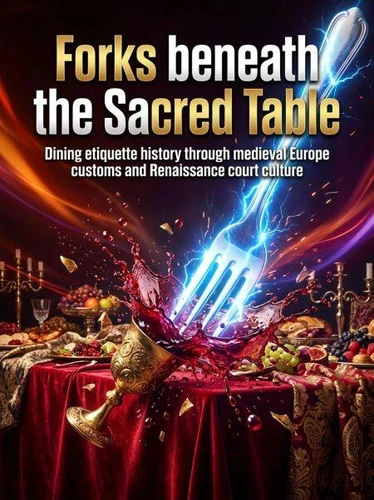
Forks beneath the Sacred Table. Dining etiquette history through medieval Europe customs and Renaissance court culture
Par :Formats :
Disponible dans votre compte client Decitre ou Furet du Nord dès validation de votre commande. Le format ePub est :
- Compatible avec une lecture sur My Vivlio (smartphone, tablette, ordinateur)
- Compatible avec une lecture sur liseuses Vivlio
- Pour les liseuses autres que Vivlio, vous devez utiliser le logiciel Adobe Digital Edition. Non compatible avec la lecture sur les liseuses Kindle, Remarkable et Sony
 , qui est-ce ?
Notre partenaire de plateforme de lecture numérique où vous retrouverez l'ensemble de vos ebooks gratuitement
Pour en savoir plus sur nos ebooks, consultez notre aide en ligne ici
C'est si simple ! Lisez votre ebook avec l'app Vivlio sur votre tablette, mobile ou ordinateur :

- Nombre de pages152
- FormatePub
- ISBN978-3-565-46532-3
- EAN9783565465323
- Date de parution28/05/2026
- Protection num.pas de protection
- Taille1012 Ko
- Infos supplémentairesepub
- ÉditeurEmphaloz Publishing House
Résumé
A simple utensil once provoked moral outrage across Christian Europe. In medieval dining etiquette, the fork appeared not as progress, but as vanity-an object accused of weakening humility and corrupting the natural order of eating. Priests condemned its elegance, nobles mocked its delicacy, and many regarded it as an offense against divine design.
From Byzantine banquet halls to Italian merchant courts, this narrative follows how table customs became a battleground of class, theology, and bodily discipline.
Using courtesy books, royal household inventories, and early theological criticism, the book traces how medieval Europe transformed eating into a visible performance of hierarchy. The spread of Renaissance dining culture introduced new anxieties about cleanliness, gender, and refinement. Forks became associated with foreign luxury, excessive femininity, and aristocratic distance from ordinary life.
Yet urban disease, changing concepts of hygiene, and the growth of diplomatic court society slowly altered European behavior. As table manners evolved, the fork ceased to symbolize moral weakness and instead became evidence of civilization itself. The transformation reveals how European history often advances through intimate habits long before political institutions change.
Using courtesy books, royal household inventories, and early theological criticism, the book traces how medieval Europe transformed eating into a visible performance of hierarchy. The spread of Renaissance dining culture introduced new anxieties about cleanliness, gender, and refinement. Forks became associated with foreign luxury, excessive femininity, and aristocratic distance from ordinary life.
Yet urban disease, changing concepts of hygiene, and the growth of diplomatic court society slowly altered European behavior. As table manners evolved, the fork ceased to symbolize moral weakness and instead became evidence of civilization itself. The transformation reveals how European history often advances through intimate habits long before political institutions change.