Author of English-language books at the intersection of self-help, business dynamics, and historical analysis. Clara uncovers universal truths to help readers build resilient lives and ventures.
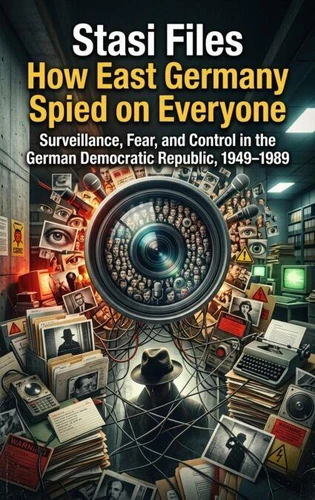
Stasi Files: How East Germany Spied on Everyone. Surveillance, Fear, and Control in the German Democratic Republic, 1949–1989
Par :Formats :
Disponible dans votre compte client Decitre ou Furet du Nord dès validation de votre commande. Le format ePub est :
- Compatible avec une lecture sur My Vivlio (smartphone, tablette, ordinateur)
- Compatible avec une lecture sur liseuses Vivlio
- Pour les liseuses autres que Vivlio, vous devez utiliser le logiciel Adobe Digital Edition. Non compatible avec la lecture sur les liseuses Kindle, Remarkable et Sony
 , qui est-ce ?
Notre partenaire de plateforme de lecture numérique où vous retrouverez l'ensemble de vos ebooks gratuitement
Pour en savoir plus sur nos ebooks, consultez notre aide en ligne ici
C'est si simple ! Lisez votre ebook avec l'app Vivlio sur votre tablette, mobile ou ordinateur :

- Nombre de pages157
- FormatePub
- ISBN978-3-565-32686-0
- EAN9783565326860
- Date de parution15/03/2026
- Protection num.pas de protection
- Taille2 Mo
- Infos supplémentairesepub
- ÉditeurEmphaloz Publishing House
Résumé
For forty years, the German Democratic Republic maintained one of the most invasive and efficient surveillance systems in modern history. The Stasi-officially the Ministry for State Security-watched not just enemies of the state, but neighbors, colleagues, and even family members. Through millions of informants and an apparatus of fear, East Germany built a society where privacy ceased to exist.
This book draws from the original Stasi archives, personal testimonies, and declassified reports to uncover how the system functioned and how ordinary citizens became both watchers and watched.
It explores the bureaucratic machinery behind the files-its reliance on paperwork, suspicion, and loyalty-and the human cost of constant surveillance: fractured trust, destroyed relationships, and a collective silence that outlived the regime itself. By examining life in the GDR through the eyes of victims, informants, and officers, this history reveals how ideology turned intelligence into control, and how the collapse of the Berlin Wall exposed the extent to which the state had penetrated the private lives of its citizens.
The Stasi's legacy remains a powerful reminder of how fear and bureaucracy can become tools of domination.
It explores the bureaucratic machinery behind the files-its reliance on paperwork, suspicion, and loyalty-and the human cost of constant surveillance: fractured trust, destroyed relationships, and a collective silence that outlived the regime itself. By examining life in the GDR through the eyes of victims, informants, and officers, this history reveals how ideology turned intelligence into control, and how the collapse of the Berlin Wall exposed the extent to which the state had penetrated the private lives of its citizens.
The Stasi's legacy remains a powerful reminder of how fear and bureaucracy can become tools of domination.