Author of English-language books at the intersection of self-help, business dynamics, and historical analysis. Clara uncovers universal truths to help readers build resilient lives and ventures.
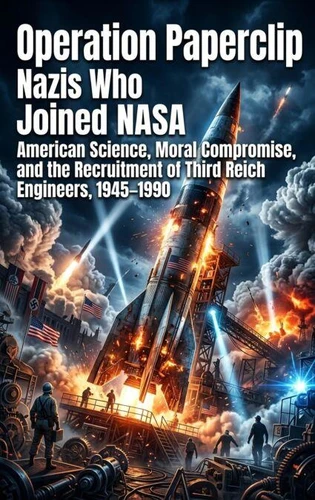
Operation Paperclip: Nazis Who Joined NASA. American Science, Moral Compromise, and the Recruitment of Third Reich Engineers, 1945–1990
Par :Formats :
Disponible dans votre compte client Decitre ou Furet du Nord dès validation de votre commande. Le format ePub est :
- Compatible avec une lecture sur My Vivlio (smartphone, tablette, ordinateur)
- Compatible avec une lecture sur liseuses Vivlio
- Pour les liseuses autres que Vivlio, vous devez utiliser le logiciel Adobe Digital Edition. Non compatible avec la lecture sur les liseuses Kindle, Remarkable et Sony
 , qui est-ce ?
Notre partenaire de plateforme de lecture numérique où vous retrouverez l'ensemble de vos ebooks gratuitement
Pour en savoir plus sur nos ebooks, consultez notre aide en ligne ici
C'est si simple ! Lisez votre ebook avec l'app Vivlio sur votre tablette, mobile ou ordinateur :

- Nombre de pages185
- FormatePub
- ISBN978-3-565-32436-1
- EAN9783565324361
- Date de parution14/03/2026
- Protection num.pas de protection
- Taille2 Mo
- Infos supplémentairesepub
- ÉditeurEmphaloz Publishing House
Résumé
At the end of World War II, as Allied forces uncovered the full horror of Nazi atrocities, the United States government made a calculated decision: recruit the scientists who had built Hitler's war machine. Under Operation Paperclip, more than 1, 600 German engineers, physicists, and aerospace specialists were brought to America-their records sanitized, their pasts obscured, their expertise deemed too valuable to surrender to the Soviets.
This book reconstructs that decision through declassified military and intelligence documents, State Department correspondence, survivor testimony from concentration camp laborers, and the personal records of the scientists themselves.
It examines how Wernher von Braun and his colleagues transitioned from designing V-2 rockets built by forced labor at Mittelwerk to leading NASA's most celebrated programs, including the Saturn V rocket that carried Americans to the moon. The narrative does not reduce these men to simple villains or heroes. Instead, it interrogates the institutional logic that made Paperclip possible-the Cold War calculus that placed technological advantage above justice, the bureaucratic processes that erased criminal records, and the survivors of Nazi labor camps who spent decades demanding acknowledgment that was never fully given. A carefully documented account of how national interest and moral accountability collided in postwar America, and what that collision cost.
It examines how Wernher von Braun and his colleagues transitioned from designing V-2 rockets built by forced labor at Mittelwerk to leading NASA's most celebrated programs, including the Saturn V rocket that carried Americans to the moon. The narrative does not reduce these men to simple villains or heroes. Instead, it interrogates the institutional logic that made Paperclip possible-the Cold War calculus that placed technological advantage above justice, the bureaucratic processes that erased criminal records, and the survivors of Nazi labor camps who spent decades demanding acknowledgment that was never fully given. A carefully documented account of how national interest and moral accountability collided in postwar America, and what that collision cost.