SOLDES
Jusqu'à -70% sur une sélection d'articles*

Nouveauté
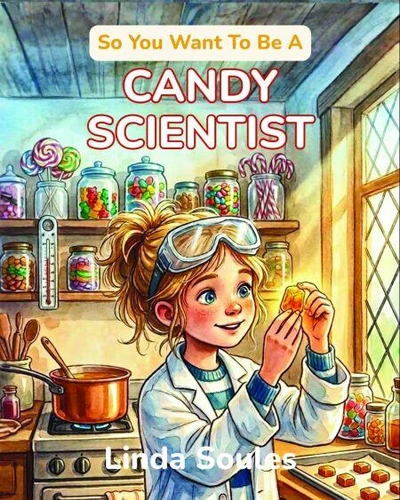
So You Want To Be A Candy Scientist. So You Want To Be A..., #40
Par :Formats :
Disponible dans votre compte client Decitre ou Furet du Nord dès validation de votre commande. Le format ePub est :
- Compatible avec une lecture sur My Vivlio (smartphone, tablette, ordinateur)
- Compatible avec une lecture sur liseuses Vivlio
- Pour les liseuses autres que Vivlio, vous devez utiliser le logiciel Adobe Digital Edition. Non compatible avec la lecture sur les liseuses Kindle, Remarkable et Sony
 , qui est-ce ?
Notre partenaire de plateforme de lecture numérique où vous retrouverez l'ensemble de vos ebooks gratuitement
Pour en savoir plus sur nos ebooks, consultez notre aide en ligne ici
C'est si simple ! Lisez votre ebook avec l'app Vivlio sur votre tablette, mobile ou ordinateur :

- FormatePub
- ISBN8235219533
- EAN9798235219533
- Date de parution20/06/2026
- Protection num.pas de protection
- Infos supplémentairesepub
- ÉditeurIoakim Ioakim
Résumé
What if the candy your kids eat every day is actually one of the most fascinating science experiments on the planet - and someone had to figure out exactly how every step works?So You Want To Be A Candy Scientist pulls back the curtain on a STEM career most people never think about: the food scientists who turn plain sugar into hard candy, silky caramel, airy marshmallow, and so many other treats we love.
Written for curious kids ages 10 to 14, this richly illustrated, visual guide makes chemistry feel like an adventure - fun, surprising, and easy to follow, even if your young reader has never picked up a science book before. The stories inside are as wild as the candy itself. Kids learn why the same sugar becomes chewy at one temperature and glass-like at another. They find out how chocolate is coaxed into a precise crystal form for that signature snap.
They explore the real chemistry behind sour candy, discover why cocoa butter makes chocolate the only candy designed to melt at body temperature, and uncover how food scientists use color to trick the human tongue. Every section reads like a conversation, not a textbook, because the best science writing takes young minds seriously. This book also introduces kids to real pioneers in food science - the chemist who fought to make candy safe for children, the inventor who cracked shelf-stable milk chocolate, and the researcher who found a natural blue dye hiding in red cabbage.
Their stories show that a career spent perfecting something as small and joyful as candy is meaningful, rigorous work. Then it is time to get hands-on. Science experiments and activities guide kids through growing rock candy at home, making edible sugar glass, and running a chocolate snap test - all connected to the food chemistry concepts they have just learned. A glossary of candy-science terms and a roadmap to next steps help young readers keep exploring long after the last page.
For kids who love asking "why, " for families who want STEM reading that sparks real curiosity, and for anyone who has ever wondered what it takes to make delicious happen on purpose - this is the book that answers. One molecule. Endless possibility.
Written for curious kids ages 10 to 14, this richly illustrated, visual guide makes chemistry feel like an adventure - fun, surprising, and easy to follow, even if your young reader has never picked up a science book before. The stories inside are as wild as the candy itself. Kids learn why the same sugar becomes chewy at one temperature and glass-like at another. They find out how chocolate is coaxed into a precise crystal form for that signature snap.
They explore the real chemistry behind sour candy, discover why cocoa butter makes chocolate the only candy designed to melt at body temperature, and uncover how food scientists use color to trick the human tongue. Every section reads like a conversation, not a textbook, because the best science writing takes young minds seriously. This book also introduces kids to real pioneers in food science - the chemist who fought to make candy safe for children, the inventor who cracked shelf-stable milk chocolate, and the researcher who found a natural blue dye hiding in red cabbage.
Their stories show that a career spent perfecting something as small and joyful as candy is meaningful, rigorous work. Then it is time to get hands-on. Science experiments and activities guide kids through growing rock candy at home, making edible sugar glass, and running a chocolate snap test - all connected to the food chemistry concepts they have just learned. A glossary of candy-science terms and a roadmap to next steps help young readers keep exploring long after the last page.
For kids who love asking "why, " for families who want STEM reading that sparks real curiosity, and for anyone who has ever wondered what it takes to make delicious happen on purpose - this is the book that answers. One molecule. Endless possibility.