Sofia Lane is a nonfiction author known for writing thoughtful books on emotional resilience, self-growth, modern relationships, and finding meaning in everyday life. Her calm and reflective writing style combines psychology, philosophy, and practical insight to help readers navigate life with greater clarity, balance, and self-awareness.
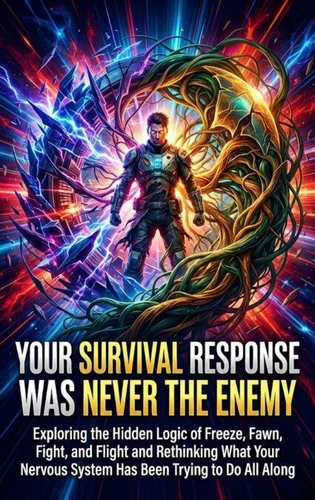
Your Survival Response Was Never the Enemy. Exploring the Hidden Logic of Freeze, Fawn, Fight, and Flight and Rethinking What Your Nervous System Has Been Trying to Do All Along
Par :Formats :
Disponible dans votre compte client Decitre ou Furet du Nord dès validation de votre commande. Le format ePub est :
- Compatible avec une lecture sur My Vivlio (smartphone, tablette, ordinateur)
- Compatible avec une lecture sur liseuses Vivlio
- Pour les liseuses autres que Vivlio, vous devez utiliser le logiciel Adobe Digital Edition. Non compatible avec la lecture sur les liseuses Kindle, Remarkable et Sony
 , qui est-ce ?
Notre partenaire de plateforme de lecture numérique où vous retrouverez l'ensemble de vos ebooks gratuitement
Pour en savoir plus sur nos ebooks, consultez notre aide en ligne ici
C'est si simple ! Lisez votre ebook avec l'app Vivlio sur votre tablette, mobile ou ordinateur :

- Nombre de pages167
- FormatePub
- ISBN978-3-565-27711-7
- EAN9783565277117
- Date de parution27/02/2026
- Protection num.pas de protection
- Taille2 Mo
- Infos supplémentairesepub
- ÉditeurEmphaloz Publishing House
Résumé
When something feels threatening, the body responds before the mind has a chance to weigh in. You shut down, or you appease, or you rage, or you run-and afterward, you often wonder why you reacted that way, why you could not simply choose something different. The answer is older and more intelligent than it first appears.
This book explores the inner experience of survival responses: not as character flaws or emotional immaturity, but as the nervous system doing precisely what it learned to do in conditions where something genuinely needed protecting.
It examines how freeze, fawn, fight, and flight develop not randomly but in response to specific relational and environmental histories-and how patterns forged in earlier experiences continue to shape present-day reactions long after the original threat has passed. At the center of this exploration is a reframe that changes how these responses feel to live with: your survival style is not a malfunction.
It is a record of adaptation. The body kept a log of what worked when safety was uncertain, and it still reaches for those same strategies whenever uncertainty returns. Understanding that record does not erase it-but it opens a different kind of relationship with what the body does under pressure. This book offers insight into the physiological and psychological dynamics of trauma responses, how each survival style carries both a protective function and a relational cost, and what it means to approach your own nervous system with curiosity rather than frustration.
It does not promise regulation or resolution. It invites a more honest and compassionate understanding of why you respond the way you do-and what that response has always been trying to keep safe.
It examines how freeze, fawn, fight, and flight develop not randomly but in response to specific relational and environmental histories-and how patterns forged in earlier experiences continue to shape present-day reactions long after the original threat has passed. At the center of this exploration is a reframe that changes how these responses feel to live with: your survival style is not a malfunction.
It is a record of adaptation. The body kept a log of what worked when safety was uncertain, and it still reaches for those same strategies whenever uncertainty returns. Understanding that record does not erase it-but it opens a different kind of relationship with what the body does under pressure. This book offers insight into the physiological and psychological dynamics of trauma responses, how each survival style carries both a protective function and a relational cost, and what it means to approach your own nervous system with curiosity rather than frustration.
It does not promise regulation or resolution. It invites a more honest and compassionate understanding of why you respond the way you do-and what that response has always been trying to keep safe.
A propos de Sofia Lane

4,49 €