SOLDES
Jusqu'à -70% sur une sélection d'articles*

Nouveauté
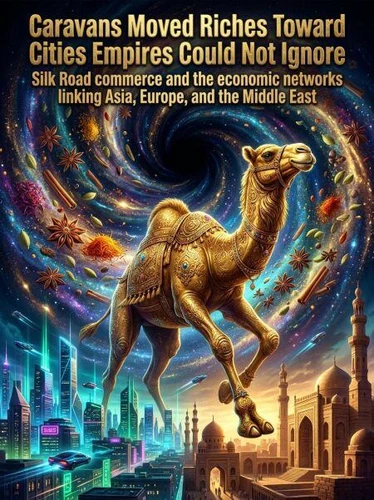
Caravans Moved Riches Toward Cities Empires Could Not Ignore. Silk Road commerce and the economic networks linking Asia, Europe, and the Middle East
Par :Formats :
Disponible dans votre compte client Decitre ou Furet du Nord dès validation de votre commande. Le format ePub est :
- Compatible avec une lecture sur My Vivlio (smartphone, tablette, ordinateur)
- Compatible avec une lecture sur liseuses Vivlio
- Pour les liseuses autres que Vivlio, vous devez utiliser le logiciel Adobe Digital Edition. Non compatible avec la lecture sur les liseuses Kindle, Remarkable et Sony
 , qui est-ce ?
Notre partenaire de plateforme de lecture numérique où vous retrouverez l'ensemble de vos ebooks gratuitement
Pour en savoir plus sur nos ebooks, consultez notre aide en ligne ici
C'est si simple ! Lisez votre ebook avec l'app Vivlio sur votre tablette, mobile ou ordinateur :

- Nombre de pages140
- FormatePub
- ISBN978-3-565-47801-9
- EAN9783565478019
- Date de parution05/06/2026
- Protection num.pas de protection
- Taille1 Mo
- Infos supplémentairesepub
- ÉditeurEmphaloz Publishing House
Résumé
For centuries, the center of global wealth did not lie in western Europe, but along the vast commercial corridors connecting Central Asia, Persia, India, China, and the Mediterranean world. Control over these routes shaped empires, financed armies, and redirected the flow of global prosperity.
This book examines the Silk Roads as the economic backbone of the premodern world. Land caravans and maritime trade routes transported silk, gold, silver, spices, and luxury goods across interconnected markets stretching from East Asia to Europe.
Cities positioned along these corridors became centers of finance, diplomacy, and imperial competition. The narrative also explores how economic power depended on political stability throughout the East. Wars, dynastic collapse, or disruptions in Central Asia repeatedly reshaped European markets and state finances. Commercial interdependence linked distant societies long before modern globalization emerged. The Silk Roads appear here not as peripheral trade paths, but as the central arteries through which wealth, power, and geopolitical influence circulated across Eurasia for centuries.
Cities positioned along these corridors became centers of finance, diplomacy, and imperial competition. The narrative also explores how economic power depended on political stability throughout the East. Wars, dynastic collapse, or disruptions in Central Asia repeatedly reshaped European markets and state finances. Commercial interdependence linked distant societies long before modern globalization emerged. The Silk Roads appear here not as peripheral trade paths, but as the central arteries through which wealth, power, and geopolitical influence circulated across Eurasia for centuries.
A propos de Sofia Lane







8,49 €