Sofia Lane is a nonfiction author known for writing thoughtful books on emotional resilience, self-growth, modern relationships, and finding meaning in everyday life. Her calm and reflective writing style combines psychology, philosophy, and practical insight to help readers navigate life with greater clarity, balance, and self-awareness.
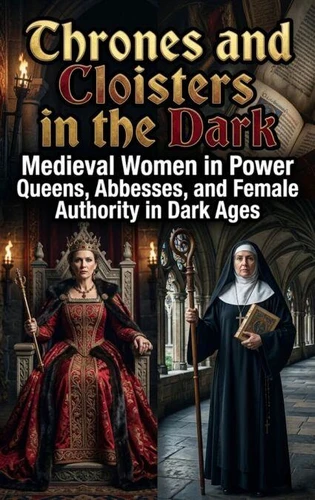
Thrones and Cloisters in the Dark. Medieval Women in Power Queens, Abbesses, and Female Authority in Dark Ages
Par :Formats :
Disponible dans votre compte client Decitre ou Furet du Nord dès validation de votre commande. Le format ePub est :
- Compatible avec une lecture sur My Vivlio (smartphone, tablette, ordinateur)
- Compatible avec une lecture sur liseuses Vivlio
- Pour les liseuses autres que Vivlio, vous devez utiliser le logiciel Adobe Digital Edition. Non compatible avec la lecture sur les liseuses Kindle, Remarkable et Sony
 , qui est-ce ?
Notre partenaire de plateforme de lecture numérique où vous retrouverez l'ensemble de vos ebooks gratuitement
Pour en savoir plus sur nos ebooks, consultez notre aide en ligne ici
C'est si simple ! Lisez votre ebook avec l'app Vivlio sur votre tablette, mobile ou ordinateur :

- Nombre de pages141
- FormatePub
- ISBN978-3-565-46143-1
- EAN9783565461431
- Date de parution26/05/2026
- Protection num.pas de protection
- Taille1 Mo
- Infos supplémentairesepub
- ÉditeurEmphaloz Publishing House
Résumé
This book investigates how women claimed and wielded authority in an age often remembered for its silence about them, tracing royal queens who negotiated wars and successions alongside abbesses who ruled monasteries like secular princes. It follows the lives of women who governed lands, commanded armies, and shaped religious communities, showing how medieval power was never simply a male inheritance but a contested field in which women carved out space through marriage, inheritance, sanctity, and institutional office.
Drawing on charters, chronicles, and monastic records, the book reconstructs the mechanisms that allowed women to rule: the ways queens used dowries, patronage, and motherhood to influence kings and courts; how abbesses presided over "double monasteries" where they governed both men and women; and how female saints and royal widows negotiated with bishops and emperors to secure land, law, and autonomy.
It also examines the legal and theological constraints that framed women's power as exceptional or unnatural, revealing how chroniclers alternately celebrated and minimized their agency in order to preserve masculine narratives of kingship and church authority.
It also examines the legal and theological constraints that framed women's power as exceptional or unnatural, revealing how chroniclers alternately celebrated and minimized their agency in order to preserve masculine narratives of kingship and church authority.
A propos de Sofia Lane

4,49 €