SOLDES
Jusqu'à -70% sur une sélection d'articles*

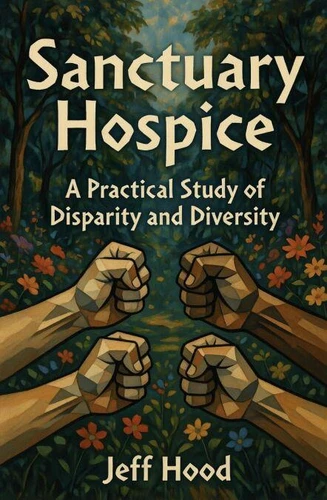
Sanctuary Hospice: A Practical Study of Disparity and Diversity
Par :Formats :
Disponible dans votre compte client Decitre ou Furet du Nord dès validation de votre commande. Le format ePub est :
- Compatible avec une lecture sur My Vivlio (smartphone, tablette, ordinateur)
- Compatible avec une lecture sur liseuses Vivlio
- Pour les liseuses autres que Vivlio, vous devez utiliser le logiciel Adobe Digital Edition. Non compatible avec la lecture sur les liseuses Kindle, Remarkable et Sony
 , qui est-ce ?
Notre partenaire de plateforme de lecture numérique où vous retrouverez l'ensemble de vos ebooks gratuitement
Pour en savoir plus sur nos ebooks, consultez notre aide en ligne ici
C'est si simple ! Lisez votre ebook avec l'app Vivlio sur votre tablette, mobile ou ordinateur :

- FormatePub
- ISBN8233241307
- EAN9798233241307
- Date de parution08/03/2026
- Protection num.pas de protection
- Infos supplémentairesepub
- ÉditeurLinda Balsamo
Résumé
A raw, unflinching ethical investigation into covert racism in end-of-life care. In 2011-2012, Rev. Dr. Jeff Hood, then a doctoral student and chaplain-in-training, conducted an in-depth practicum at Sanctuary Hospice House in Tupelo, Mississippi-a nonprofit facility founded on Christian compassion and a mission to serve all, regardless of ability to pay. What began as a study of racial disparity quickly exposed a deeper, more insidious reality: a white-dominated environment riddled with cultural incompetence, racially insensitive language, and systemic barriers that marginalized Black patients, families, and staff.
Through anonymous surveys (where 50% of employees admitted the hospice was not a racially sensitive workplace), focus groups, and candid personal interviews, Hood documented disturbing patterns: casual use of slurs like "colored" and the N-word, resistance to minority outreach, marketing geared almost exclusively toward white communities, and a lack of diverse leadership and cultural awareness. Black employees described feeling unheard and unsafe, while statistics revealed stark underrepresentation-only ~11% of patients were Black in a region where the population was nearly 37% Black.
Blending bioethics training from Creighton University, theological reflection, and on-the-ground activism, Hood proposes concrete solutions: mandatory cultural competency training to eradicate insensitive language and practices, and the creation of a dedicated minority outreach director to build trust, expand marketing, and recruit diverse board members and patients. Though written nearly a decade ago (with data from 2011-2012), Hood notes in his 2020 foreword that the issues remain painfully relevant.
His views have since radicalized, calling for even stronger accountability-but this foundational report stands as a prophetic challenge to hospices, healthcare institutions, and society: racism does not spare the dying. It is our moral imperative to confront and eradicate it.
Through anonymous surveys (where 50% of employees admitted the hospice was not a racially sensitive workplace), focus groups, and candid personal interviews, Hood documented disturbing patterns: casual use of slurs like "colored" and the N-word, resistance to minority outreach, marketing geared almost exclusively toward white communities, and a lack of diverse leadership and cultural awareness. Black employees described feeling unheard and unsafe, while statistics revealed stark underrepresentation-only ~11% of patients were Black in a region where the population was nearly 37% Black.
Blending bioethics training from Creighton University, theological reflection, and on-the-ground activism, Hood proposes concrete solutions: mandatory cultural competency training to eradicate insensitive language and practices, and the creation of a dedicated minority outreach director to build trust, expand marketing, and recruit diverse board members and patients. Though written nearly a decade ago (with data from 2011-2012), Hood notes in his 2020 foreword that the issues remain painfully relevant.
His views have since radicalized, calling for even stronger accountability-but this foundational report stands as a prophetic challenge to hospices, healthcare institutions, and society: racism does not spare the dying. It is our moral imperative to confront and eradicate it.