SOLDES
Jusqu'à -70% sur une sélection d'articles*

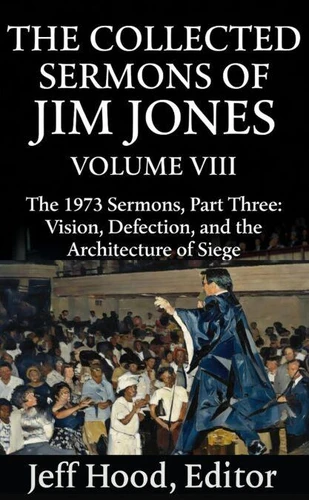
The Collected Sermons of Jim Jones. The Collected Sermons of Jim Jones, #8
Par :Formats :
Disponible dans votre compte client Decitre ou Furet du Nord dès validation de votre commande. Le format ePub est :
- Compatible avec une lecture sur My Vivlio (smartphone, tablette, ordinateur)
- Compatible avec une lecture sur liseuses Vivlio
- Pour les liseuses autres que Vivlio, vous devez utiliser le logiciel Adobe Digital Edition. Non compatible avec la lecture sur les liseuses Kindle, Remarkable et Sony
 , qui est-ce ?
Notre partenaire de plateforme de lecture numérique où vous retrouverez l'ensemble de vos ebooks gratuitement
Pour en savoir plus sur nos ebooks, consultez notre aide en ligne ici
C'est si simple ! Lisez votre ebook avec l'app Vivlio sur votre tablette, mobile ou ordinateur :

- FormatePub
- ISBN8233075568
- EAN9798233075568
- Date de parution24/03/2026
- Protection num.pas de protection
- Infos supplémentairesepub
- ÉditeurLinda Balsamo
Résumé
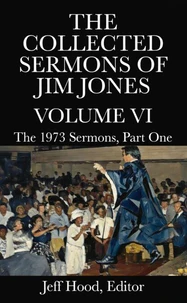
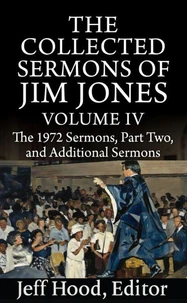
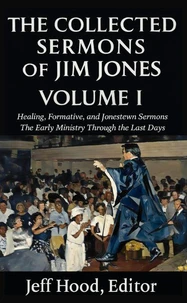
The Collected Sermons of Jim Jones, Volume VIII: The 1973 Sermons, Part Three - Vision, Defection, and the Architecture of Siege presents nine full sermon transcripts from the Q-number archive - Q1023, Q1027, Q1053-4, Q1057-2, Q1057-3, Q1057-4, Q1059-1, Q1059-3, and Q1059-4 - capturing Jim Jones at a pivotal and darkening moment in the history of Peoples Temple. By late 1973, the Temple was at its largest and most committed.
The Guyanese agricultural project that would become Jonestown was moving from vision toward reality. Jones preached with the energy of a man who believed he was building something that would outlast him - a revolutionary communalism rooted in racial, social, and economic equality. These sermons preserve that energy in full: the miracle testimonies, the offering calls, the congregation's ecstatic responses, the theological debates about God, Christ, socialism, and the nature of love.
They also preserve something more troubling - the mechanisms of control becoming increasingly explicit. The sermons on defection, takeover, and internal discipline reveal Jones hardening the community's boundaries in ways that would make departure nearly impossible. As editor Jeff Hood observes in his volume introduction, by the end of 1973 the Peoples Temple was functioning less like a voluntary community and more like a total institution.
The transcripts are presented with their original Q-number designations, the cataloguing system imposed by federal investigators after November 18, 1978, and maintained by the Jonestown Institute. Each sermon is introduced with brief editorial context situating it within the arc of Jones's development as both preacher and manipulator.
The Guyanese agricultural project that would become Jonestown was moving from vision toward reality. Jones preached with the energy of a man who believed he was building something that would outlast him - a revolutionary communalism rooted in racial, social, and economic equality. These sermons preserve that energy in full: the miracle testimonies, the offering calls, the congregation's ecstatic responses, the theological debates about God, Christ, socialism, and the nature of love.
They also preserve something more troubling - the mechanisms of control becoming increasingly explicit. The sermons on defection, takeover, and internal discipline reveal Jones hardening the community's boundaries in ways that would make departure nearly impossible. As editor Jeff Hood observes in his volume introduction, by the end of 1973 the Peoples Temple was functioning less like a voluntary community and more like a total institution.
The transcripts are presented with their original Q-number designations, the cataloguing system imposed by federal investigators after November 18, 1978, and maintained by the Jonestown Institute. Each sermon is introduced with brief editorial context situating it within the arc of Jones's development as both preacher and manipulator.