SOLDES
Jusqu'à -70% sur une sélection d'articles*

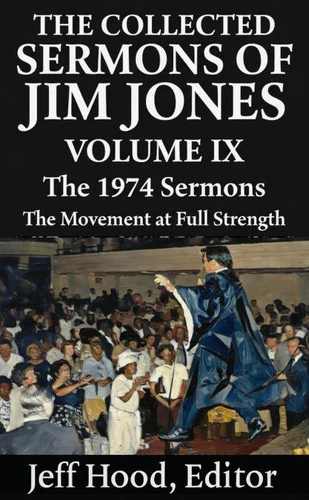
The Collected Sermons of Jim Jones. The Collected Sermons of Jim Jones, #9
Par :Formats :
Disponible dans votre compte client Decitre ou Furet du Nord dès validation de votre commande. Le format ePub est :
- Compatible avec une lecture sur My Vivlio (smartphone, tablette, ordinateur)
- Compatible avec une lecture sur liseuses Vivlio
- Pour les liseuses autres que Vivlio, vous devez utiliser le logiciel Adobe Digital Edition. Non compatible avec la lecture sur les liseuses Kindle, Remarkable et Sony
 , qui est-ce ?
Notre partenaire de plateforme de lecture numérique où vous retrouverez l'ensemble de vos ebooks gratuitement
Pour en savoir plus sur nos ebooks, consultez notre aide en ligne ici
C'est si simple ! Lisez votre ebook avec l'app Vivlio sur votre tablette, mobile ou ordinateur :

- FormatePub
- ISBN8233261886
- EAN9798233261886
- Date de parution24/03/2026
- Protection num.pas de protection
- Infos supplémentairesepub
- ÉditeurLinda Balsamo
Résumé
The Collected Sermons of Jim Jones, Volume IX: The 1974 Sermons - The Movement at Full Strength presents eleven full sermon transcripts from the federally catalogued Q-number archive - Q218, Q612, Q952, Q953, Q1024, Q1053-1, Q1053-3, Q1058-3, Q1059-4, Q1059-5, and Q1059-6 - capturing Jim Jones at the height of his organizational power and the peak of his congregation's reach. By 1974, the Peoples Temple had grown beyond what any single gathering could contain.
Jones was preaching to thousands across multiple California cities, managing a complex institutional apparatus of facilities, senior homes, and bus fleets, while the Guyanese agricultural settlement that would become Jonestown was actively under construction. These sermons document that reality in real time - the sprawling, logistically extraordinary, emotionally overwhelming world that Jones had built, and the people who had given everything to be part of it.
Jones's preaching in 1974 is some of his most politically sophisticated. The sermons gathered here engage seriously with liberation theology, socialist political theory, the critique of institutional religion, American imperialism, racial injustice, and the corruption of political power - from Nixon's Watergate to CIA operations in Chile. Jones was a voracious thinker, and these transcripts show him weaving scripture, Marxist theory, Mark Twain, and raw congregational testimony into a preaching style that was simultaneously intellectually demanding and emotionally overwhelming.
Sermons range from intimate discussions of who belongs in the Temple's closed meetings, to sweeping denunciations of sky-god religion, to Jones declaring himself a living savior superior to any unknown God. Also visible in these transcripts is something more troubling: the increasing weight Jones claims to carry on behalf of his people, and the reciprocal obligation he extracts. He is already teaching his congregation that he is dying for them.
He is already asking them to consider what they owe him in return. The performance of sacrificial suffering - exhaustion, sleeplessness, constant emergency - is in full operation by 1974, and the transcripts preserve it with unflinching clarity.
Jones was preaching to thousands across multiple California cities, managing a complex institutional apparatus of facilities, senior homes, and bus fleets, while the Guyanese agricultural settlement that would become Jonestown was actively under construction. These sermons document that reality in real time - the sprawling, logistically extraordinary, emotionally overwhelming world that Jones had built, and the people who had given everything to be part of it.
Jones's preaching in 1974 is some of his most politically sophisticated. The sermons gathered here engage seriously with liberation theology, socialist political theory, the critique of institutional religion, American imperialism, racial injustice, and the corruption of political power - from Nixon's Watergate to CIA operations in Chile. Jones was a voracious thinker, and these transcripts show him weaving scripture, Marxist theory, Mark Twain, and raw congregational testimony into a preaching style that was simultaneously intellectually demanding and emotionally overwhelming.
Sermons range from intimate discussions of who belongs in the Temple's closed meetings, to sweeping denunciations of sky-god religion, to Jones declaring himself a living savior superior to any unknown God. Also visible in these transcripts is something more troubling: the increasing weight Jones claims to carry on behalf of his people, and the reciprocal obligation he extracts. He is already teaching his congregation that he is dying for them.
He is already asking them to consider what they owe him in return. The performance of sacrificial suffering - exhaustion, sleeplessness, constant emergency - is in full operation by 1974, and the transcripts preserve it with unflinching clarity.