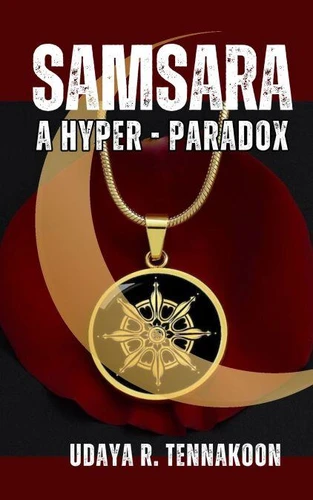
Samsara: A Hyper Paradox
Par :Formats :
Disponible dans votre compte client Decitre ou Furet du Nord dès validation de votre commande. Le format ePub est :
- Compatible avec une lecture sur My Vivlio (smartphone, tablette, ordinateur)
- Compatible avec une lecture sur liseuses Vivlio
- Pour les liseuses autres que Vivlio, vous devez utiliser le logiciel Adobe Digital Edition. Non compatible avec la lecture sur les liseuses Kindle, Remarkable et Sony
 , qui est-ce ?
Notre partenaire de plateforme de lecture numérique où vous retrouverez l'ensemble de vos ebooks gratuitement
Pour en savoir plus sur nos ebooks, consultez notre aide en ligne ici
C'est si simple ! Lisez votre ebook avec l'app Vivlio sur votre tablette, mobile ou ordinateur :

- FormatePub
- ISBN8224176205
- EAN9798224176205
- Date de parution21/08/2025
- Protection num.pas de protection
- Infos supplémentairesepub
- ÉditeurDraft2Digital
Résumé
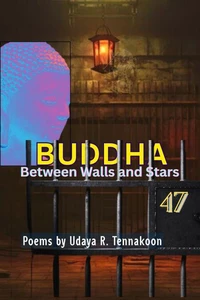
The collection, culminating in Hyper-paradox, constitutes a sustained meditation on the tensions of memory, identity, and displacement, offering a distinctive voice in contemporary diasporic literature. By employing haiku, senryu, and tanka forms, the poet negotiates the boundaries between immediacy and reflection, image and concept, personal experience and collective history. The formal precision of Japanese poetic structures amplifies the thematic concerns of liminality, exile, and cultural hybridity, producing a textual space in which the fragmentary nature of memory and the paradoxes of identity can be fully explored.
Hyper-paradox in particular exemplifies the poet's engagement with philosophical and meta-poetic concerns, transforming the collection from a series of individual moments into a coherent exploration of thought, presence, and contradiction. The poem's reflexive quality not only interrogates the nature of perception and language but also positions the poet as a conscious witness to the socio-political and existential dimensions of diasporic life.
In sum, the collection demonstrates how traditional Japanese forms can be transmuted to address contemporary diasporic realities, linking personal and cultural memory with ethical and political awareness. The interplay of lyrical economy and conceptual depth, culminating in Hyper-paradox, situates this work at the intersection of poetics, philosophy, and social critique, offering readers both aesthetic pleasure and intellectual provocation.
It exemplifies the capacity of diasporic literature to negotiate multiple temporalities, cultural registers, and philosophical registers, producing a hybridized literary practice that is at once deeply personal, politically aware, and universally resonant.
Hyper-paradox in particular exemplifies the poet's engagement with philosophical and meta-poetic concerns, transforming the collection from a series of individual moments into a coherent exploration of thought, presence, and contradiction. The poem's reflexive quality not only interrogates the nature of perception and language but also positions the poet as a conscious witness to the socio-political and existential dimensions of diasporic life.
In sum, the collection demonstrates how traditional Japanese forms can be transmuted to address contemporary diasporic realities, linking personal and cultural memory with ethical and political awareness. The interplay of lyrical economy and conceptual depth, culminating in Hyper-paradox, situates this work at the intersection of poetics, philosophy, and social critique, offering readers both aesthetic pleasure and intellectual provocation.
It exemplifies the capacity of diasporic literature to negotiate multiple temporalities, cultural registers, and philosophical registers, producing a hybridized literary practice that is at once deeply personal, politically aware, and universally resonant.
A propos de Udaya R. Tennakoon

5,99 €





6,99 €

5,49 €



6,49 €
5,49 €

7,99 €