SOLDES
Jusqu'à -70% sur une sélection d'articles*

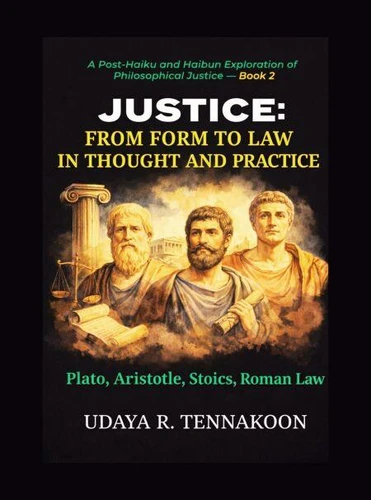
Justice: From Form to Law in Thought and Practice. Philosophy Poetry, #2
Par :Formats :
Disponible dans votre compte client Decitre ou Furet du Nord dès validation de votre commande. Le format ePub est :
- Compatible avec une lecture sur My Vivlio (smartphone, tablette, ordinateur)
- Compatible avec une lecture sur liseuses Vivlio
- Pour les liseuses autres que Vivlio, vous devez utiliser le logiciel Adobe Digital Edition. Non compatible avec la lecture sur les liseuses Kindle, Remarkable et Sony
 , qui est-ce ?
Notre partenaire de plateforme de lecture numérique où vous retrouverez l'ensemble de vos ebooks gratuitement
Pour en savoir plus sur nos ebooks, consultez notre aide en ligne ici
C'est si simple ! Lisez votre ebook avec l'app Vivlio sur votre tablette, mobile ou ordinateur :

- FormatePub
- ISBN8233898921
- EAN9798233898921
- Date de parution20/01/2026
- Protection num.pas de protection
- Infos supplémentairesepub
- ÉditeurLinda Balsamo
Résumé
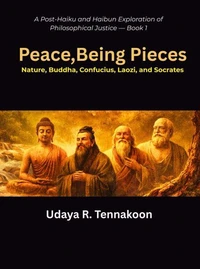
Ustice: From Form to Law in Thought and Practice - Book 2 continues the exploration begun in Peace, Being Pieces. This volume examines the evolution of justice from Plato's conception of ideal order, through Aristotle's cultivation of virtue, to the Stoic integration of reason and natural law, and the Roman codification of civic justice. Where Book 1 traced justice emerging from breath, ritual, and attention in the cosmos, this book follows its crystallization in cities, institutions, and human practice.
Plato's dialogues show how inquiry and reason shape the soul and the polis, highlighting the tension between desire and harmony. Aristotle relocates justice to habit and character, grounding virtue in daily life. Epicurus demonstrates how care for self and friends nurtures ethical peace, while Stoics like Seneca and Marcus Aurelius show justice as alignment with reason and cosmic law. Roman jurists, especially Cicero, translate these insights into civic law, balancing custom, duty, and fairness.
Through post-haibun and post-haiku, this book invites readers not only to read but to inhabit justice: to feel its pulse, to witness its unfolding in human practice, and to reflect on its relational and ecological dimensions. Justice is not presented as a static principle but as a living current, flowing through thought, city, law, and human care. Structured to echo the evolution of moral and legal thought, the book presents sequences of haibun, post-haibun, haiku, and post-haiku that guide readers through philosophical inquiry, ethical reflection, and civic practice.
By weaving poetry with philosophy, it provides a meditative lens for understanding justice as it moves from abstract form to embodied action, from contemplation to law, and from individual virtue to universal concern. This work is both a study and a meditation-a bridge between ancient reflection and contemporary ethical awareness, engaging readers seeking philosophy, poetry, or the enduring questions of justice in human life.
Plato's dialogues show how inquiry and reason shape the soul and the polis, highlighting the tension between desire and harmony. Aristotle relocates justice to habit and character, grounding virtue in daily life. Epicurus demonstrates how care for self and friends nurtures ethical peace, while Stoics like Seneca and Marcus Aurelius show justice as alignment with reason and cosmic law. Roman jurists, especially Cicero, translate these insights into civic law, balancing custom, duty, and fairness.
Through post-haibun and post-haiku, this book invites readers not only to read but to inhabit justice: to feel its pulse, to witness its unfolding in human practice, and to reflect on its relational and ecological dimensions. Justice is not presented as a static principle but as a living current, flowing through thought, city, law, and human care. Structured to echo the evolution of moral and legal thought, the book presents sequences of haibun, post-haibun, haiku, and post-haiku that guide readers through philosophical inquiry, ethical reflection, and civic practice.
By weaving poetry with philosophy, it provides a meditative lens for understanding justice as it moves from abstract form to embodied action, from contemplation to law, and from individual virtue to universal concern. This work is both a study and a meditation-a bridge between ancient reflection and contemporary ethical awareness, engaging readers seeking philosophy, poetry, or the enduring questions of justice in human life.
A propos de Udaya R. Tennakoon

5,99 €


6,99 €
5,49 €
6,49 €
5,49 €
7,99 €