Gideon Hart is a nonfiction author who writes about leadership, philosophy, and the psychology of decision-making. His work explores how discipline, resilience, and long-term thinking shape both personal growth and success in times of uncertainty.
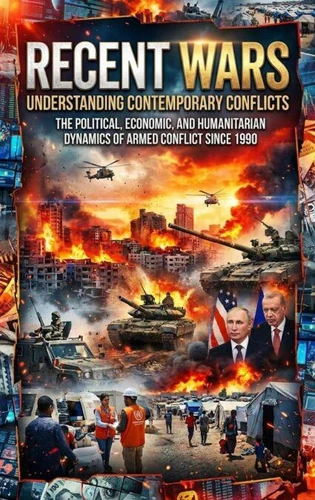
Recent Wars: Understanding Contemporary Conflicts. The Political, Economic, and Humanitarian Dynamics of Armed Conflict Since 1990
Par :Formats :
Disponible dans votre compte client Decitre ou Furet du Nord dès validation de votre commande. Le format ePub est :
- Compatible avec une lecture sur My Vivlio (smartphone, tablette, ordinateur)
- Compatible avec une lecture sur liseuses Vivlio
- Pour les liseuses autres que Vivlio, vous devez utiliser le logiciel Adobe Digital Edition. Non compatible avec la lecture sur les liseuses Kindle, Remarkable et Sony
 , qui est-ce ?
Notre partenaire de plateforme de lecture numérique où vous retrouverez l'ensemble de vos ebooks gratuitement
Pour en savoir plus sur nos ebooks, consultez notre aide en ligne ici
C'est si simple ! Lisez votre ebook avec l'app Vivlio sur votre tablette, mobile ou ordinateur :

- Nombre de pages244
- FormatePub
- ISBN978-3-565-24962-6
- EAN9783565249626
- Date de parution15/02/2026
- Protection num.pas de protection
- Taille2 Mo
- Infos supplémentairesepub
- ÉditeurEmphaloz Publishing House
Résumé
Contemporary armed conflicts differ from twentieth-century wars in their participants, motivations, and consequences, yet they emerge from similar patterns of state fragility, resource competition, and unresolved historical grievances. This comprehensive analysis examines major conflicts since the Cold War's end-from the Yugoslav wars and Rwandan genocide through Iraq and Afghanistan to Syrian civil war and ongoing regional conflicts-exploring the structural factors, triggering events, and international responses that shape modern warfare.
Drawing on conflict analysis, diplomatic records, humanitarian reports, and participant testimonies, this book reveals how ethnic tensions, state collapse, resource exploitation, and external intervention interact to produce prolonged instability.
It explores the changing nature of warfare with non-state actors, the humanitarian impact of siege tactics and displacement, the role of international institutions in conflict resolution, and how conflicts reshape regional power dynamics. The narrative examines patterns across conflicts while respecting each war's specific context, analyzing how historical grievances are mobilized, how civilian populations experience violence, how peace negotiations succeed or fail, and what post-conflict reconstruction requires.
It addresses the gap between international law and actual conduct, the challenges of accountability for war crimes, and how conflicts create refugee crises with global implications. Without sensationalism, this work provides rigorous analysis of contemporary conflict dynamics and their human costs.
It explores the changing nature of warfare with non-state actors, the humanitarian impact of siege tactics and displacement, the role of international institutions in conflict resolution, and how conflicts reshape regional power dynamics. The narrative examines patterns across conflicts while respecting each war's specific context, analyzing how historical grievances are mobilized, how civilian populations experience violence, how peace negotiations succeed or fail, and what post-conflict reconstruction requires.
It addresses the gap between international law and actual conduct, the challenges of accountability for war crimes, and how conflicts create refugee crises with global implications. Without sensationalism, this work provides rigorous analysis of contemporary conflict dynamics and their human costs.