The loudest money advice of the last decade has been quietly wrong, and it has cost the people who followed it more than they know. Every money book on the shelf tells you to work harder. Wake up earlier. Grind. Optimize every minute and audit every dollar. The cover photo shows the author in front of a private jet, and the promise is that if you do exactly what the book says, you too can stand in front of one, and that this is what wealth was all along.
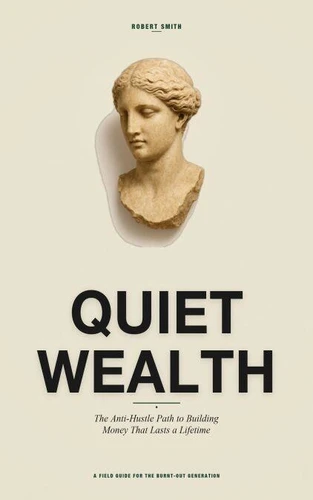
Quiet Wealth makes a different argument: that the people who actually build lasting wealth are almost never the loudest, and that the path most adults are sold is a tax paid in advance for a destination that, on average, is no wealthier than the quiet one. Across fourteen chapters and three parts, it makes the unhurried case for a kind of wealth that needs no brand, no audience, no side hustle, and no luxury vehicle.
It looks at the data on what actually predicts a comfortable retirement (not effort), the temperament that compounds across forty years (not ambition), and the small number of decisions that, made well in your twenties or thirties, do the work in the background of your life. Inside:- The Hustle Tax, the three currencies (health, relationships, identity) the loud path quietly bills, and why the receipt does not arrive until forty-eight - The three money personalities, Striver, Spender, Builder, and which one is sabotaging the strategy you already know - The four anti-goals, the big house, the status car, lifestyle creep, and the performative side hustle, that destroy more wealth than any market crash - Why boring income beats sexy income for almost everyone, and how to make your current job quieter without earning less - The two investing decisions that matter, and the dozen that do not - Lifestyle compression, the five categories worth spending on, and the calm audit that removes the rest - How to keep doing the quiet thing for thirty years while everyone around you flails, brags, and occasionally seems, for a season, to be lapping youFor the reader who already half-suspects the hustle story is wrong and wants permission, structure, and a thirty-year map of what trying less actually looks like.
For readers of The Psychology of Money by Morgan Housel, The Millionaire Next Door by Thomas J. Stanley, and Die With Zero by Bill Perkins. Quiet wealth does not feel like luxury. It feels like sleep. The loud path has a marketing budget. The quiet path has its survivors.
The loudest money advice of the last decade has been quietly wrong, and it has cost the people who followed it more than they know. Every money book on the shelf tells you to work harder. Wake up earlier. Grind. Optimize every minute and audit every dollar. The cover photo shows the author in front of a private jet, and the promise is that if you do exactly what the book says, you too can stand in front of one, and that this is what wealth was all along.
Quiet Wealth makes a different argument: that the people who actually build lasting wealth are almost never the loudest, and that the path most adults are sold is a tax paid in advance for a destination that, on average, is no wealthier than the quiet one. Across fourteen chapters and three parts, it makes the unhurried case for a kind of wealth that needs no brand, no audience, no side hustle, and no luxury vehicle.
It looks at the data on what actually predicts a comfortable retirement (not effort), the temperament that compounds across forty years (not ambition), and the small number of decisions that, made well in your twenties or thirties, do the work in the background of your life. Inside:- The Hustle Tax, the three currencies (health, relationships, identity) the loud path quietly bills, and why the receipt does not arrive until forty-eight - The three money personalities, Striver, Spender, Builder, and which one is sabotaging the strategy you already know - The four anti-goals, the big house, the status car, lifestyle creep, and the performative side hustle, that destroy more wealth than any market crash - Why boring income beats sexy income for almost everyone, and how to make your current job quieter without earning less - The two investing decisions that matter, and the dozen that do not - Lifestyle compression, the five categories worth spending on, and the calm audit that removes the rest - How to keep doing the quiet thing for thirty years while everyone around you flails, brags, and occasionally seems, for a season, to be lapping youFor the reader who already half-suspects the hustle story is wrong and wants permission, structure, and a thirty-year map of what trying less actually looks like.
For readers of The Psychology of Money by Morgan Housel, The Millionaire Next Door by Thomas J. Stanley, and Die With Zero by Bill Perkins. Quiet wealth does not feel like luxury. It feels like sleep. The loud path has a marketing budget. The quiet path has its survivors.


 , qui est-ce ?