Gideon Hart is a nonfiction author who writes about leadership, philosophy, and the psychology of decision-making. His work explores how discipline, resilience, and long-term thinking shape both personal growth and success in times of uncertainty.
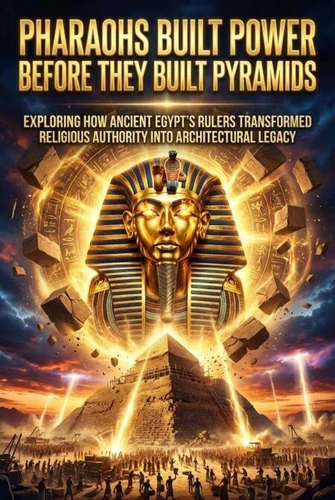
Pharaohs Built Power Before They Built Pyramids. Exploring How Ancient Egypt's Rulers Transformed Religious Authority Into Architectural Legacy
Par :Formats :
Disponible dans votre compte client Decitre ou Furet du Nord dès validation de votre commande. Le format ePub est :
- Compatible avec une lecture sur My Vivlio (smartphone, tablette, ordinateur)
- Compatible avec une lecture sur liseuses Vivlio
- Pour les liseuses autres que Vivlio, vous devez utiliser le logiciel Adobe Digital Edition. Non compatible avec la lecture sur les liseuses Kindle, Remarkable et Sony
 , qui est-ce ?
Notre partenaire de plateforme de lecture numérique où vous retrouverez l'ensemble de vos ebooks gratuitement
Pour en savoir plus sur nos ebooks, consultez notre aide en ligne ici
C'est si simple ! Lisez votre ebook avec l'app Vivlio sur votre tablette, mobile ou ordinateur :

- Nombre de pages161
- FormatePub
- ISBN978-3-565-21055-8
- EAN9783565210558
- Date de parution30/01/2026
- Protection num.pas de protection
- Taille2 Mo
- Infos supplémentairesepub
- ÉditeurEmphaloz Publishing House
Résumé
The pyramids stand as Egypt's most iconic monuments, but their story begins long before the first stone was laid. This book traces how pharaohs consolidated religious and political power through generations of institution-building, ritual innovation, and social reorganization-transformations that made monumental architecture possible.
Drawing on archaeological evidence from predynastic settlements to the Old Kingdom's zenith, the narrative follows the evolution of kingship itself: from regional chieftains to divine rulers who commanded the resources, labor systems, and ideological frameworks necessary for pyramid construction.
Palace archives, temple inscriptions, and burial practices reveal how pharaohs positioned themselves as essential mediators between gods and mortals, turning abstract authority into concrete stone. The book examines not just royal ambition but the communities who quarried limestone, transported blocks, and sustained construction sites for decades. It reframes the pyramids as culminating expressions of centralized power rather than spontaneous wonders-monuments that required centuries of groundwork in governance, theology, and social hierarchy.
Palace archives, temple inscriptions, and burial practices reveal how pharaohs positioned themselves as essential mediators between gods and mortals, turning abstract authority into concrete stone. The book examines not just royal ambition but the communities who quarried limestone, transported blocks, and sustained construction sites for decades. It reframes the pyramids as culminating expressions of centralized power rather than spontaneous wonders-monuments that required centuries of groundwork in governance, theology, and social hierarchy.