The oil and gas industry operates across one of the most complex value chains in the world, spanning exploration, drilling, production, refining, pipeline transportation, and energy distribution. Operators are asked to increase production while strengthening process safety, improve equipment reliability while reducing maintenance costs, accelerate digital transformation while maintaining industrial cybersecurity, and pursue operational efficiency while meeting environmental and regulatory requirements.
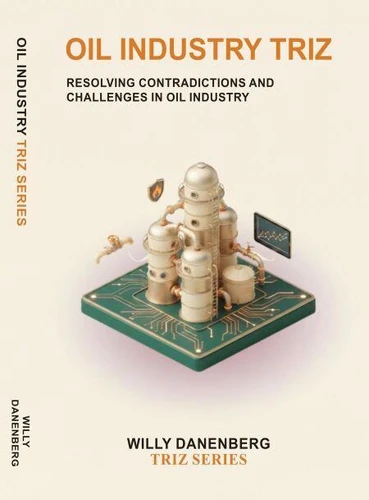
These competing priorities are often treated as unavoidable trade-offs across the industry. Oil Industry TRIZ offers a structured alternative. Applying the Theory of Inventive Problem Solving (TRIZ) to petroleum engineering and energy operations, this original methodology gives executives, engineers, and operational leaders a practical framework for identifying the true conflict behind an operational challenge and designing solutions that improve multiple objectives simultaneously, rather than sacrificing one priority for another.
The book applies this contradiction driven approach across the full oil and gas value chain, including drilling engineering, reservoir management, production operations, refining, asset integrity, maintenance and reliability, process safety, environmental protection, and industrial cybersecurity. Each contradiction is analyzed through operational context, TRIZ based resolution, applicable inventive principles, and expected outcomes, giving petroleum engineers, refinery managers, HSE leaders, and asset integrity specialists a repeatable methodology rather than isolated technical guidance.
Practical operational playbooks then apply the framework to realistic industry scenarios, showing how organizations can strengthen safety, reliability, and performance at the same time. Written by Willy Danenberg, an independent consultant and executive advisor specializing in IT governance, cybersecurity, digital transformation, risk management, and organizational leadership, this book is designed for oil and gas executives, petroleum and process engineers, operations managers, maintenance and reliability professionals, HSE leaders, and digital transformation specialists who need practical tools for improving safety, efficiency, and resilience without accepting unnecessary compromises.
It complements established engineering standards and management systems, offering a disciplined path toward sustainable operational excellence across the energy sector.
The oil and gas industry operates across one of the most complex value chains in the world, spanning exploration, drilling, production, refining, pipeline transportation, and energy distribution. Operators are asked to increase production while strengthening process safety, improve equipment reliability while reducing maintenance costs, accelerate digital transformation while maintaining industrial cybersecurity, and pursue operational efficiency while meeting environmental and regulatory requirements.
These competing priorities are often treated as unavoidable trade-offs across the industry. Oil Industry TRIZ offers a structured alternative. Applying the Theory of Inventive Problem Solving (TRIZ) to petroleum engineering and energy operations, this original methodology gives executives, engineers, and operational leaders a practical framework for identifying the true conflict behind an operational challenge and designing solutions that improve multiple objectives simultaneously, rather than sacrificing one priority for another.
The book applies this contradiction driven approach across the full oil and gas value chain, including drilling engineering, reservoir management, production operations, refining, asset integrity, maintenance and reliability, process safety, environmental protection, and industrial cybersecurity. Each contradiction is analyzed through operational context, TRIZ based resolution, applicable inventive principles, and expected outcomes, giving petroleum engineers, refinery managers, HSE leaders, and asset integrity specialists a repeatable methodology rather than isolated technical guidance.
Practical operational playbooks then apply the framework to realistic industry scenarios, showing how organizations can strengthen safety, reliability, and performance at the same time. Written by Willy Danenberg, an independent consultant and executive advisor specializing in IT governance, cybersecurity, digital transformation, risk management, and organizational leadership, this book is designed for oil and gas executives, petroleum and process engineers, operations managers, maintenance and reliability professionals, HSE leaders, and digital transformation specialists who need practical tools for improving safety, efficiency, and resilience without accepting unnecessary compromises.
It complements established engineering standards and management systems, offering a disciplined path toward sustainable operational excellence across the energy sector.