SOLDES
Jusqu'à -70% sur une sélection d'articles*

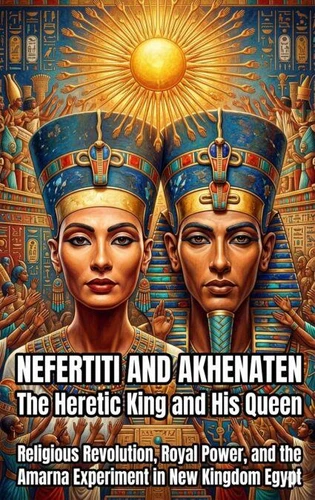
Nefertiti and Akhenaten: The Heretic King and His Queen. Religious Revolution, Royal Power, and the Amarna Experiment in New Kingdom Egypt
Par :Formats :
Disponible dans votre compte client Decitre ou Furet du Nord dès validation de votre commande. Le format ePub est :
- Compatible avec une lecture sur My Vivlio (smartphone, tablette, ordinateur)
- Compatible avec une lecture sur liseuses Vivlio
- Pour les liseuses autres que Vivlio, vous devez utiliser le logiciel Adobe Digital Edition. Non compatible avec la lecture sur les liseuses Kindle, Remarkable et Sony
 , qui est-ce ?
Notre partenaire de plateforme de lecture numérique où vous retrouverez l'ensemble de vos ebooks gratuitement
Pour en savoir plus sur nos ebooks, consultez notre aide en ligne ici
C'est si simple ! Lisez votre ebook avec l'app Vivlio sur votre tablette, mobile ou ordinateur :

- Nombre de pages199
- FormatePub
- ISBN978-3-565-32472-9
- EAN9783565324729
- Date de parution14/03/2026
- Protection num.pas de protection
- Taille2 Mo
- Infos supplémentairesepub
- ÉditeurEmphaloz Publishing House
Résumé
In the fourteenth century BCE, the Egyptian pharaoh Amenhotep IV did something no ruler of the ancient world's most theologically conservative civilization had attempted: he dismantled the established religious order, suppressed the powerful priesthood of Amun, relocated the capital to a city built from nothing in the desert, and declared a single solar deity - the Aten - the sole focus of state worship.
He renamed himself Akhenaten. Beside him, depicted with unprecedented prominence in royal art, stood Nefertiti - a queen whose representations suggest a political and religious authority that remains without parallel in pharaonic history. This book reconstructs the Amarna period through archaeological excavation records from Tell el-Amarna, the Amarna Letters diplomatic archive, royal inscriptions, and decades of Egyptological scholarship.
It examines what Akhenaten's religious revolution actually involved - the theological content of Aten worship, the coercive suppression of competing cults, and the administrative reorganization of a state apparatus built around a new ideological framework - and what role Nefertiti played in designing and sustaining it. The narrative also confronts the aftermath: the systematic erasure of Akhenaten's legacy by successors, the still-unresolved questions surrounding Nefertiti's fate and possible co-regency, and the discovery of Tutankhamun's tomb as an indirect consequence of the Amarna revolution's violent undoing. A rigorous, archaeologically grounded account of ancient Egypt's most audacious experiment in religious and political transformation - and the two figures at its center.
He renamed himself Akhenaten. Beside him, depicted with unprecedented prominence in royal art, stood Nefertiti - a queen whose representations suggest a political and religious authority that remains without parallel in pharaonic history. This book reconstructs the Amarna period through archaeological excavation records from Tell el-Amarna, the Amarna Letters diplomatic archive, royal inscriptions, and decades of Egyptological scholarship.
It examines what Akhenaten's religious revolution actually involved - the theological content of Aten worship, the coercive suppression of competing cults, and the administrative reorganization of a state apparatus built around a new ideological framework - and what role Nefertiti played in designing and sustaining it. The narrative also confronts the aftermath: the systematic erasure of Akhenaten's legacy by successors, the still-unresolved questions surrounding Nefertiti's fate and possible co-regency, and the discovery of Tutankhamun's tomb as an indirect consequence of the Amarna revolution's violent undoing. A rigorous, archaeologically grounded account of ancient Egypt's most audacious experiment in religious and political transformation - and the two figures at its center.