Jared Douglas is an English-language nonfiction author known for writing investigative works on economics, industrial systems, and the hidden infrastructure behind modern society. His books combine analytical depth with accessible storytelling, examining how supply chains, corporate influence, technological change, and political decisions shape everyday life in ways most people rarely notice. Jared's writing style is direct, immersive, and richly detailed, turning complex institutional subjects into narratives that feel both urgent and deeply human.
Nouveauté
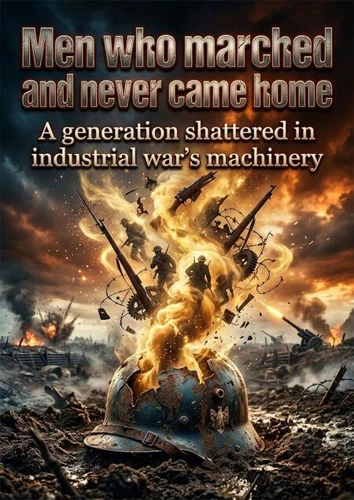
Men who marched and never came home. A generation shattered in industrial war's machinery
Par :Formats :
Disponible dans votre compte client Decitre ou Furet du Nord dès validation de votre commande. Le format ePub est :
- Compatible avec une lecture sur My Vivlio (smartphone, tablette, ordinateur)
- Compatible avec une lecture sur liseuses Vivlio
- Pour les liseuses autres que Vivlio, vous devez utiliser le logiciel Adobe Digital Edition. Non compatible avec la lecture sur les liseuses Kindle, Remarkable et Sony
 , qui est-ce ?
Notre partenaire de plateforme de lecture numérique où vous retrouverez l'ensemble de vos ebooks gratuitement
Pour en savoir plus sur nos ebooks, consultez notre aide en ligne ici
C'est si simple ! Lisez votre ebook avec l'app Vivlio sur votre tablette, mobile ou ordinateur :

- Nombre de pages160
- FormatePub
- ISBN978-3-565-59044-5
- EAN9783565590445
- Date de parution26/07/2026
- Protection num.pas de protection
- Taille1 Mo
- Infos supplémentairesepub
- ÉditeurEmphaloz Publishing House
Résumé
By 1914, Europe had perfected the machinery of death but forgotten how to stop it. This book focuses on the human experience of World War I-the soldiers who faced machine guns, poison gas, and artillery barrages that erased entire battalions in minutes. It moves beyond generals and strategies to examine how ordinary men and women endured the first fully industrial conflict in history. Trench warfare created a new kind of suffering: psychological collapse, physical mutilation, and a permanent break between those who fought and those who stayed home.
The war consumed not just lives but entire communities, leaving villages without young men and families without futures. This account traces how the scale of death reshaped European society, from the rise of war memorials to the silent grief that became a national condition. The generation that survived was never whole again-and its trauma echoed through every subsequent decade.
The war consumed not just lives but entire communities, leaving villages without young men and families without futures. This account traces how the scale of death reshaped European society, from the rise of war memorials to the silent grief that became a national condition. The generation that survived was never whole again-and its trauma echoed through every subsequent decade.