Jared Douglas is an English-language nonfiction author known for writing investigative works on economics, industrial systems, and the hidden infrastructure behind modern society. His books combine analytical depth with accessible storytelling, examining how supply chains, corporate influence, technological change, and political decisions shape everyday life in ways most people rarely notice. Jared's writing style is direct, immersive, and richly detailed, turning complex institutional subjects into narratives that feel both urgent and deeply human.
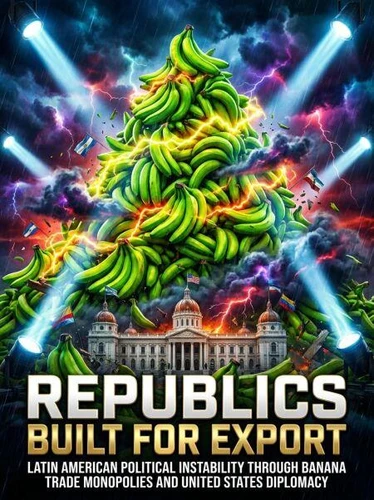
Republics Built for Export. Latin American political instability through banana trade monopolies and United States diplomacy
Par :Formats :
Disponible dans votre compte client Decitre ou Furet du Nord dès validation de votre commande. Le format ePub est :
- Compatible avec une lecture sur My Vivlio (smartphone, tablette, ordinateur)
- Compatible avec une lecture sur liseuses Vivlio
- Pour les liseuses autres que Vivlio, vous devez utiliser le logiciel Adobe Digital Edition. Non compatible avec la lecture sur les liseuses Kindle, Remarkable et Sony
 , qui est-ce ?
Notre partenaire de plateforme de lecture numérique où vous retrouverez l'ensemble de vos ebooks gratuitement
Pour en savoir plus sur nos ebooks, consultez notre aide en ligne ici
C'est si simple ! Lisez votre ebook avec l'app Vivlio sur votre tablette, mobile ou ordinateur :

- Nombre de pages148
- FormatePub
- ISBN978-3-565-46473-9
- EAN9783565464739
- Date de parution28/05/2026
- Protection num.pas de protection
- Taille1 Mo
- Infos supplémentairesepub
- ÉditeurEmphaloz Publishing House
Résumé
Entire nations were redesigned around a single crop. Behind the image of tropical abundance stood fragile governments, foreign creditors, and diplomatic negotiations shaped by commercial dependency.
This account of the Banana Wars examines how customs revenue, infrastructure loans, and shipping agreements tied Central American states to powerful agricultural corporations. Rather than portraying intervention as isolated military action, the narrative follows administrative collapse, manipulated elections, and legal frameworks written to favor export monopolies.
Drawing from declassified diplomatic correspondence, archival banking records, and early twentieth-century trade agreements, the book reconstructs the political machinery that enabled companies such as the United Fruit Company to influence taxation, labor regulation, and constitutional authority. Railroads connected plantations to ports while bypassing local development, creating economies vulnerable to price fluctuations and external pressure.
The resulting instability affected peasant communities, urban workers, and military institutions alike. The Banana Wars became a defining chapter in the relationship between capitalism and sovereignty. Their legacy survives in debates about multinational power, debt dependency, and the limits of national independence in global markets.
Drawing from declassified diplomatic correspondence, archival banking records, and early twentieth-century trade agreements, the book reconstructs the political machinery that enabled companies such as the United Fruit Company to influence taxation, labor regulation, and constitutional authority. Railroads connected plantations to ports while bypassing local development, creating economies vulnerable to price fluctuations and external pressure.
The resulting instability affected peasant communities, urban workers, and military institutions alike. The Banana Wars became a defining chapter in the relationship between capitalism and sovereignty. Their legacy survives in debates about multinational power, debt dependency, and the limits of national independence in global markets.