Writes investigative nonfiction about hidden industries, economic power, and forgotten American infrastructure.
Nouveauté
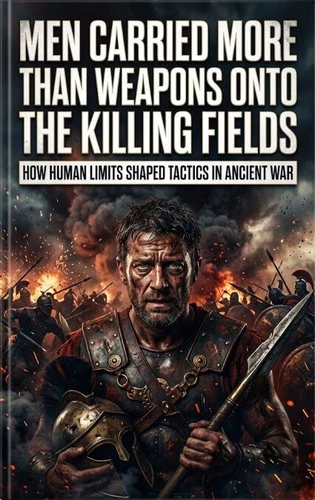
Men carried more than weapons onto the killing fields. How human limits shaped tactics in ancient war
Par :Formats :
Disponible dans votre compte client Decitre ou Furet du Nord dès validation de votre commande. Le format ePub est :
- Compatible avec une lecture sur My Vivlio (smartphone, tablette, ordinateur)
- Compatible avec une lecture sur liseuses Vivlio
- Pour les liseuses autres que Vivlio, vous devez utiliser le logiciel Adobe Digital Edition. Non compatible avec la lecture sur les liseuses Kindle, Remarkable et Sony
 , qui est-ce ?
Notre partenaire de plateforme de lecture numérique où vous retrouverez l'ensemble de vos ebooks gratuitement
Pour en savoir plus sur nos ebooks, consultez notre aide en ligne ici
C'est si simple ! Lisez votre ebook avec l'app Vivlio sur votre tablette, mobile ou ordinateur :

- Nombre de pages187
- FormatePub
- ISBN978-3-565-54552-0
- EAN9783565545520
- Date de parution08/07/2026
- Protection num.pas de protection
- Taille558 Ko
- Infos supplémentairesepub
- ÉditeurEmphaloz Publishing House
Résumé
A legionary marching twenty miles in full kit is not thinking about empire. He is thinking about his feet, his thirst, and whether the man beside him will hold the line. This book shifts the focus from generals to the physical and psychological realities that governed pre-industrial combat. It examines how fatigue, hunger, fear, and the sheer weight of equipment shaped what armies could actually do.
Why did ancient battles often end in rout rather than annihilation? Because men collapsed before their commanders finished planning. How did armies coordinate without radios? Through signals that failed, messengers who died, and formations that relied on muscle memory. This study draws on archaeological evidence, experimental reenactments, and ancient accounts to reconstruct the embodied experience of pre-modern warfare.
It argues that tactical logic was always secondary to human physiology-that the best-laid plans broke against the limits of what soldiers could endure. From the phalanx to the longbow, the same truth holds: strategy is what happens after the body says no. For readers seeking a materialist history of conflict, this book offers an unromantic view of how war was actually fought.
Why did ancient battles often end in rout rather than annihilation? Because men collapsed before their commanders finished planning. How did armies coordinate without radios? Through signals that failed, messengers who died, and formations that relied on muscle memory. This study draws on archaeological evidence, experimental reenactments, and ancient accounts to reconstruct the embodied experience of pre-modern warfare.
It argues that tactical logic was always secondary to human physiology-that the best-laid plans broke against the limits of what soldiers could endure. From the phalanx to the longbow, the same truth holds: strategy is what happens after the body says no. For readers seeking a materialist history of conflict, this book offers an unromantic view of how war was actually fought.
A propos de Ryan Holloway

24,99 €