Nouveauté
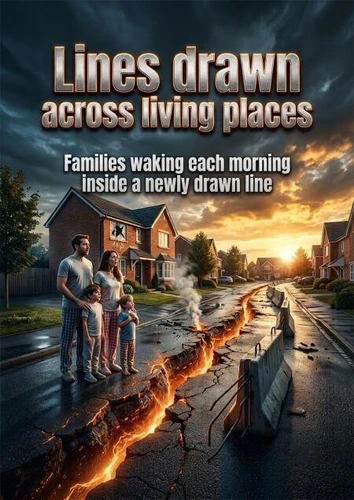
Lines drawn across living places. Families waking each morning inside a newly drawn line
Par :Formats :
Disponible dans votre compte client Decitre ou Furet du Nord dès validation de votre commande. Le format ePub est :
- Compatible avec une lecture sur My Vivlio (smartphone, tablette, ordinateur)
- Compatible avec une lecture sur liseuses Vivlio
- Pour les liseuses autres que Vivlio, vous devez utiliser le logiciel Adobe Digital Edition. Non compatible avec la lecture sur les liseuses Kindle, Remarkable et Sony
 , qui est-ce ?
Notre partenaire de plateforme de lecture numérique où vous retrouverez l'ensemble de vos ebooks gratuitement
Pour en savoir plus sur nos ebooks, consultez notre aide en ligne ici
C'est si simple ! Lisez votre ebook avec l'app Vivlio sur votre tablette, mobile ou ordinateur :

- Nombre de pages153
- FormatePub
- ISBN978-3-565-59303-3
- EAN9783565593033
- Date de parution27/07/2026
- Protection num.pas de protection
- Taille1 Mo
- Infos supplémentairesepub
- ÉditeurEmphaloz Publishing House
Résumé
The Treaty of Versailles did not merely redraw borders-it redrew the lives of millions who woke up in nations they had never chosen. German farmers in West Prussia became Polish citizens overnight. Ethnic Germans in Alsace-Lorraine faced impossible choices between language and loyalty. The people of Danzig found themselves in a free city belonging to no one. This narrative traces how territorial clauses-the Polish Corridor, the Saar Basin, the loss of overseas colonies-created demographic upheavals that diplomacy could never mend.
Population transfers, refugee crises, and economic collapse followed the dissolution of once-integrated regional economies. Beyond geopolitics, the treaty's human dimension unfolded in the loss of savings accounts, passports, and the right to educate children in one's own language. Drawing on local archives, personal letters, and municipal records, this study reconstructs the human geography of the treaty's aftermath.
It argues that the territorial settlement of 1919 created more minority populations than it satisfied national aspirations, leaving a legacy of irredentism and resentment that the next war would attempt to settle by force.
Population transfers, refugee crises, and economic collapse followed the dissolution of once-integrated regional economies. Beyond geopolitics, the treaty's human dimension unfolded in the loss of savings accounts, passports, and the right to educate children in one's own language. Drawing on local archives, personal letters, and municipal records, this study reconstructs the human geography of the treaty's aftermath.
It argues that the territorial settlement of 1919 created more minority populations than it satisfied national aspirations, leaving a legacy of irredentism and resentment that the next war would attempt to settle by force.