SOLDES
Jusqu'à -70% sur une sélection d'articles*

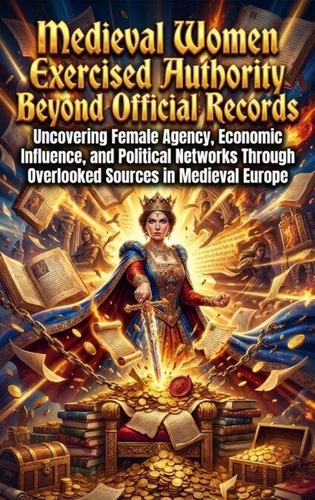
Medieval Women Exercised Authority Beyond Official Records. Uncovering Female Agency, Economic Influence, and Political Networks Through Overlooked Sources in Medieval Europe
Par :Formats :
Disponible dans votre compte client Decitre ou Furet du Nord dès validation de votre commande. Le format ePub est :
- Compatible avec une lecture sur My Vivlio (smartphone, tablette, ordinateur)
- Compatible avec une lecture sur liseuses Vivlio
- Pour les liseuses autres que Vivlio, vous devez utiliser le logiciel Adobe Digital Edition. Non compatible avec la lecture sur les liseuses Kindle, Remarkable et Sony
 , qui est-ce ?
Notre partenaire de plateforme de lecture numérique où vous retrouverez l'ensemble de vos ebooks gratuitement
Pour en savoir plus sur nos ebooks, consultez notre aide en ligne ici
C'est si simple ! Lisez votre ebook avec l'app Vivlio sur votre tablette, mobile ou ordinateur :

- Nombre de pages166
- FormatePub
- ISBN978-3-565-21661-1
- EAN9783565216611
- Date de parution01/02/2026
- Protection num.pas de protection
- Taille2 Mo
- Infos supplémentairesepub
- ÉditeurEmphaloz Publishing House
Résumé
Medieval women's power operated through channels that traditional chronicles rarely documented-property management, religious patronage, trade networks, and household governance. This book examines how women across social classes exercised agency within and beyond legal constraints, revealing a more complex picture of medieval society than male-centered narratives suggest.
Drawing on wills, account books, monastic records, and material evidence, the narrative traces how women managed estates during Crusades, controlled wealth through dowries and inheritances, founded religious institutions, and influenced political decisions through kinship networks.
Noblewomen negotiated treaties, merchant wives ran businesses, and abbesses governed entire communities with administrative and spiritual authority. The book explores how women's documented activities challenge assumptions about medieval gender restrictions. Through analysis of legal documents, correspondence, and archaeological finds, it reveals economic contributions, intellectual networks, and political strategies that shaped medieval life.
Relevant for understanding how power functions outside formal institutions and how historical narratives privilege certain sources while marginalizing others that would complicate simplified stories about women's exclusion from medieval public life.
Noblewomen negotiated treaties, merchant wives ran businesses, and abbesses governed entire communities with administrative and spiritual authority. The book explores how women's documented activities challenge assumptions about medieval gender restrictions. Through analysis of legal documents, correspondence, and archaeological finds, it reveals economic contributions, intellectual networks, and political strategies that shaped medieval life.
Relevant for understanding how power functions outside formal institutions and how historical narratives privilege certain sources while marginalizing others that would complicate simplified stories about women's exclusion from medieval public life.
A propos de Sarah Whitfield














8,99 €