SOLDES
Jusqu'à -70% sur une sélection d'articles*

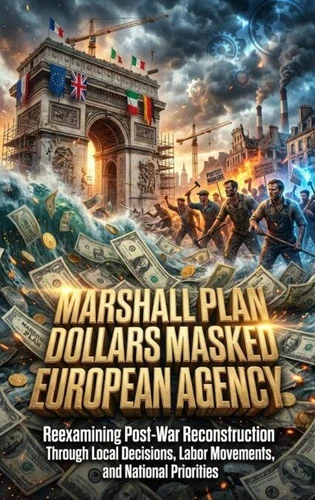
Marshall Plan Dollars Masked European Agency. Reexamining Post-War Reconstruction Through Local Decisions, Labor Movements, and National Priorities
Par :Formats :
Disponible dans votre compte client Decitre ou Furet du Nord dès validation de votre commande. Le format ePub est :
- Compatible avec une lecture sur My Vivlio (smartphone, tablette, ordinateur)
- Compatible avec une lecture sur liseuses Vivlio
- Pour les liseuses autres que Vivlio, vous devez utiliser le logiciel Adobe Digital Edition. Non compatible avec la lecture sur les liseuses Kindle, Remarkable et Sony
 , qui est-ce ?
Notre partenaire de plateforme de lecture numérique où vous retrouverez l'ensemble de vos ebooks gratuitement
Pour en savoir plus sur nos ebooks, consultez notre aide en ligne ici
C'est si simple ! Lisez votre ebook avec l'app Vivlio sur votre tablette, mobile ou ordinateur :

- Nombre de pages243
- FormatePub
- ISBN978-3-565-20779-4
- EAN9783565207794
- Date de parution29/01/2026
- Protection num.pas de protection
- Taille2 Mo
- Infos supplémentairesepub
- ÉditeurEmphaloz Publishing House
Résumé
Post-war Europe is remembered through American aid-the Marshall Plan rebuilding a devastated continent. Yet this narrative of transatlantic generosity overlooks the reality: European governments made strategic choices about which industries to rebuild, labor unions negotiated welfare systems that defined modern social democracy, and local communities organized reconstruction before foreign aid arrived.
American dollars mattered, but they flowed into frameworks Europeans themselves designed. This book traces reconstruction through national planning documents, trade union records, parliamentary debates, and municipal archives. It examines how French technocrats prioritized heavy industry, how British Labour built the NHS despite austerity, and how West German unions secured co-determination rights in exchange for wage restraint.
The focus extends beyond government policy to include the displaced persons rebuilding homes, the women entering industrial workforces, and the colonial subjects whose resources subsidized metropolitan recovery. By analyzing reconstruction as a process of contested choices rather than inevitable progress, this work reveals how post-war Europe emerged from specific political decisions embedded in power relationships.
It explores the gap between reconstruction mythology and documented reality-asking whose vision of Europe actually prevailed, and at what cost to whom.
American dollars mattered, but they flowed into frameworks Europeans themselves designed. This book traces reconstruction through national planning documents, trade union records, parliamentary debates, and municipal archives. It examines how French technocrats prioritized heavy industry, how British Labour built the NHS despite austerity, and how West German unions secured co-determination rights in exchange for wage restraint.
The focus extends beyond government policy to include the displaced persons rebuilding homes, the women entering industrial workforces, and the colonial subjects whose resources subsidized metropolitan recovery. By analyzing reconstruction as a process of contested choices rather than inevitable progress, this work reveals how post-war Europe emerged from specific political decisions embedded in power relationships.
It explores the gap between reconstruction mythology and documented reality-asking whose vision of Europe actually prevailed, and at what cost to whom.
A propos de Sarah Whitfield













8,99 €